Receive Daily Blog Emails
You agree to receive daily blog emails a link to the full blog contents. You can unsubscribe at any time.
Be Sure To Check Your SPAM Folder For Your Welcome Message and WHITELIST Our Email So It Doesn't Go To SPAM In The Future!
Why the Hero’s Journey Captivates (and Converts) in Marketing Storytelling
Tuesday, May 13, 2025
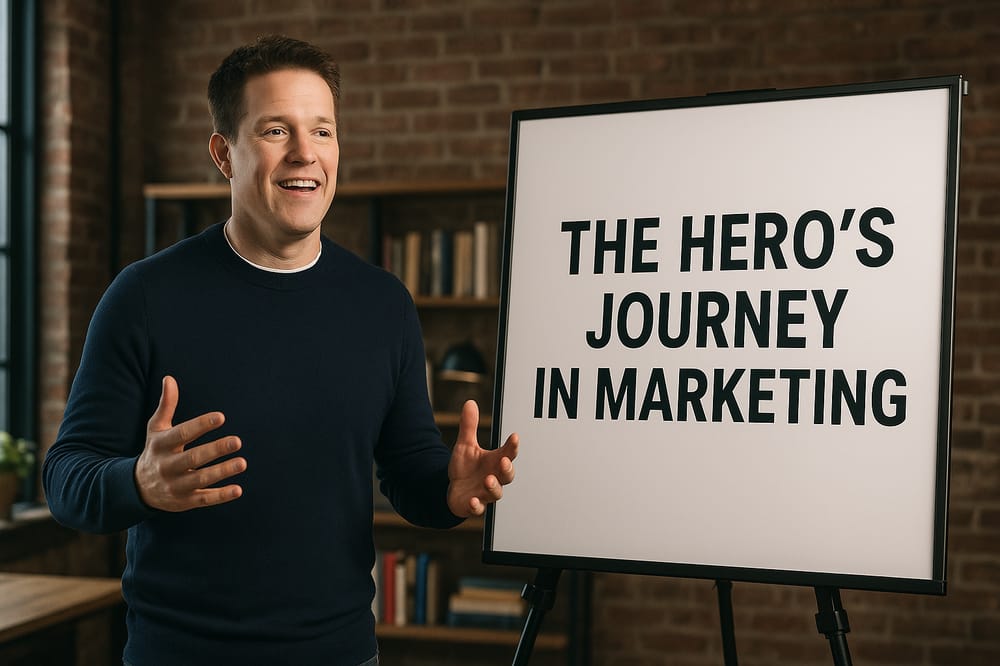
Stories sell. Great marketers know that facts and figures fade away, but we almost never forget a truly moving story. One of the most enduring frameworks for stories that inspire action is the hero’s journey. But what is the hero’s journey, and why does it work so well in marketing? And how have brands—from solo course creators to massive SaaS companies like ClickFunnels—used it to build trust, boost sales, and turn customers into loyal fans?
This blog digs deep into the hero’s journey, shows why it’s so effective for digital marketers and course creators, and unpacks actionable examples you can use right now. If you’re looking to craft irresistible sales pages, webinars, or emails, you’ll get plenty of inspiration here—with a special peek at how Russell Brunson has mastered this model (and how you can see it live at the upcoming Selling Online event).
What Is the Hero’s Journey?
The hero’s journey is a storytelling template identified by writer Joseph Campbell. At its core, the template involves a hero who leaves their ordinary world, faces trials, receives help, undergoes transformation, and returns home changed. You’ll find this archetype behind countless beloved movies and books—from Star Wars to Harry Potter to The Lion King.
But the hero’s journey is far from reserved for Hollywood scripts. It’s also a powerful marketing tool that helps businesses connect with audiences on a deep emotional level.
The Structure of the Hero’s Journey
Campbell’s hero’s journey contains up to 17 stages, but marketers tend to use a simplified version, such as this:
- The Ordinary World: The hero's starting point
- The Call to Adventure: The problem or challenge appears
- Refusal of the Call: Initial hesitation or doubt
- Meeting the Mentor: Guidance from someone experienced
- Crossing the Threshold: The hero commits to change
- Tests, Allies, and Enemies: Facing obstacles and getting support
- The Ordeal: The big challenge or turning point
- The Reward: Problem solved, transformation achieved
- The Road Back & Return: The hero brings new knowledge/gift to their world
This structure mirrors many customer journeys, making it a perfect fit for marketing.
Why the Hero’s Journey Is a Marketer’s Secret Weapon
Emotional Engagement
Stories based on the hero’s journey tap into universal themes of struggle, growth, and transformation. Audiences relate to the hero’s fears, challenges, and ultimate triumphs. When brands position their customers as the hero (not themselves), it builds connection and trust.
Proven Blueprint for Persuasion
Because the hero’s journey has shaped stories for thousands of years, our brains are wired to follow its arc. Each stage logically leads to the next, guiding customers through curiosity, skepticism, adversity, and ultimate success. This is the backbone of powerful case studies, testimonials, and brand stories that lead to conversions.
Data-Backed Effectiveness
- According to a Stanford study, stories are 22 times more memorable than facts and figures alone.
- Neuroimaging research reveals that story-driven marketing increases emotional engagement and purchasing intent.
- Brands using narrative-based copy see an average increase of 30% in conversion rates compared to straightforward feature-based messaging.
The Hero’s Journey in Action: Lessons from Russell Brunson and ClickFunnels
Few marketers have leveraged the hero’s journey more effectively than Russell Brunson, founder of ClickFunnels. His webinars, sales pages, and books are masterclasses in transforming ordinary product offers into compelling adventures.
Russell Brunson’s Formula for Storyselling
Brunson teaches that the customer—not the business—is the true hero. The business serves as the mentor (think Yoda or Gandalf), guiding the hero on their quest.
He applies the hero’s journey to nearly every important marketing touchpoint:
- Webinar Pitches: The audience starts with a pain point ("the ordinary world"), faces skepticism ("refusal of the call"), hears about Russell's own struggles, then learns the framework ("meeting the mentor"), faces challenges (case studies and FAQs), and finally, is offered the transformation (the product).
- Sales Pages: ClickFunnels landing pages walk visitors through a narrative, often featuring before-and-after stories, social proof, and a clear call to action that represents "the return home" with a new solution.
- Email Marketing: Many of Brunson's launches use serialized stories that build anticipation and trust, mirroring each stage of the hero's arc.
Real ClickFunnels Example
Scroll through the ClickFunnels homepage, or any major sales funnel template, and you’ll spot this pattern immediately:
- Ordinary World: "Picture running your business the old way... Tiring, time-consuming, unpredictable."
- Call to Adventure: "What if you could automate your sales process and double your leads?"
- Refusal of the Call: "You've probably tried before, bought expensive tools, and felt overwhelmed."
- Mentor Appears: "That's why we built ClickFunnels. I failed until I found the right process...";
- Cross the Threshold: "It's time to take a leap and build your first funnel."
- Tests & Allies: "Here's how others like you did it - with real results."
- The Ordeal: Overcome biggest fear ("Will it work for me?", addressed through proof, demos, testimonials.
- Reward: "More signups, more sales, more time back."
- Return: "Join over 100,000 users. Change your business forever."
This isn’t random. It’s a systematic approach designed to move readers from passive observers to engaged heroes keen to convert.
How Digital Marketers and Course Creators Can Harness the Hero’s Journey
Want to adopt the hero’s journey in your own marketing? Here’s how digital marketers and course creators can implement it in practical, conversion-boosting ways.
1. Map Out Your Customer’s Story
Instead of recounting your brand’s origin story, make your customer the center of the narrative. Answer:
- What is their "ordinary world" (current routine or pain point)?
- What challenge triggers their "call to adventure"?
- What doubts keep them from acting ("refusal of the call")?
- How does your business, product, or course act as the mentor or guide?
- What obstacles do they face along the way, and how can you help?
- What transformation is possible, and how does life improve when they return?
2. Integrate the Journey into Your Funnels and Content
Use the hero’s journey as a storyboard for:
• Webinars and Live Training
Introduce your customer’s main problem. Share your relatable struggles and failures. Finally, present your framework or product as the proven step-by-step mentor.
• Landing Pages & VSLs
Structure copy to walk readers from “before” to “after”—highlighting their doubts, your guidance, their wins, and a clear, risk-free call to action.
• Testimonials & Case Studies
Gather customer stories using the hero’s narrative structure. “I was stuck… I found this course… It was hard at first, but then everything changed…”
• Email Sequences
Nurture sequences that start with a relatable pain point, over
3. Use Visuals and Data to Amplify Your Story
• Share “before and after” shots, completion badges, or user dashboards as tangible signs of the journey’s reward.
• Add metrics and charts (increase in leads, revenue) to back up the transformation.
4. Invite the Customer To Start Their Own Journey
Close every funnel with a call to action that aligns with the end of the hero’s story. “Are you ready to take the leap?” “Will you answer the call?”
The Ultimate Selling Tool for the Modern Marketer
The hero’s journey is far more than an old storytelling device. For digital marketers and course creators, it’s a battle-tested way to build connection, guide prospects, and increase conversions. Russell Brunson and ClickFunnels are living proof that when you make the customer the star and your offer the mentor, you get stories (and sales) that stick.
Want to see the hero’s journey in practice and uncover frameworks that drive real results? Register for the Selling Online event and join other marketers mastering storytelling that sells.


Tim Hewitt, Author
Tim is a Freelance Digital Marketer who specializes in helping other marketers to find ways to earn online. When you are frustrated with your prior efforts, Tim will help you find the way!
Copyright © 2026, The Digital Marketing Buzz | All Rights Reserved.