Receive Daily Blog Emails
You agree to receive daily blog emails a link to the full blog contents. You can unsubscribe at any time.
Be Sure To Check Your SPAM Folder For Your Welcome Message and WHITELIST Our Email So It Doesn't Go To SPAM In The Future!
Why the 13-Month Calendar Failed - And What Marketers Can Learn from It
Monday, July 21, 2025
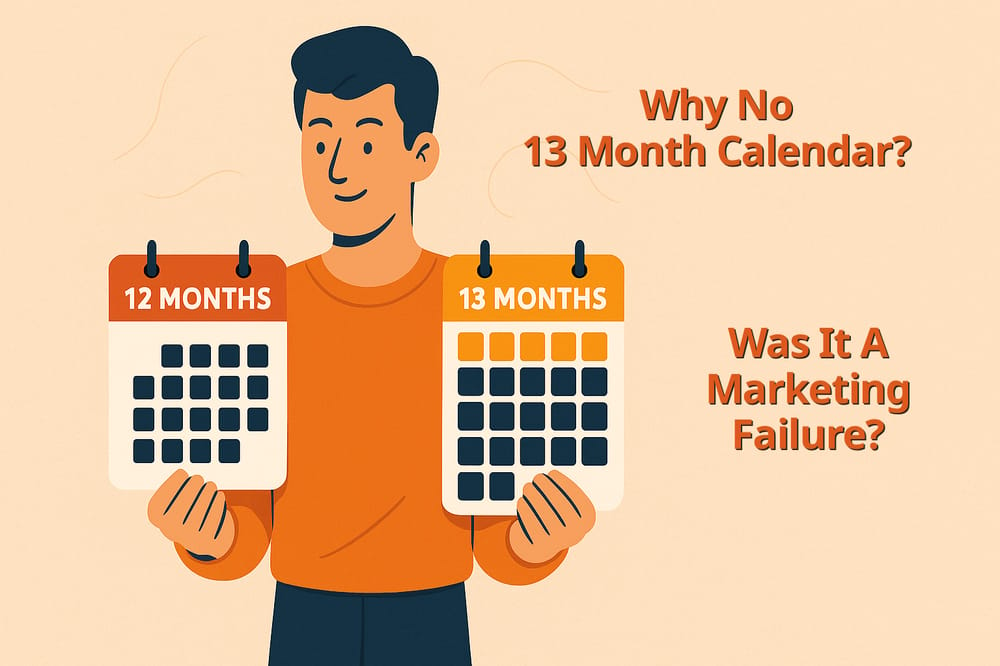
The idea of a 13-month calendar isn't new. By dividing the year into 13 equal months of 28 days each, this system aimed to streamline date calculations and align months more consistently with the lunar cycle. Technologically and logically, it made sense - but it never gained traction. Was the problem technical? Hardly. The failure of the 13-month calendar underscores a key lesson for marketers - innovative ideas don't succeed on merit alone. Success hinges on communication, storytelling, and strategic messaging.
The Innovation Behind the 13-Month Calendar
At its core, the 13-month calendar proposed a solution to inefficiencies in the Gregorian system many parts of the world use today.
- Standardization: Each month would have exactly 28 days, creating symmetry and simplifying planning.
- Predictable Patterns: Fixed weekdays for specific dates would eliminate confusion.
- Alignment with Natural Cycles: The design better aligned with lunar cycles, appealing to those seeking harmony with nature.
Yet despite its logic, the 13-month calendar faced widespread rejection—not because of its practicality but due to a fundamental failure in public reception.
Why It Failed - A PR and Marketing Perspective
1. Poor Storytelling and Lack of Clear Benefits
Introducing a disruptive concept like the 13-month calendar required more than just presenting its technical merits. The public didn’t hear an inspiring narrative about how this system would improve their daily lives. Instead, it likely came across as a cumbersome overhaul of an already familiar system.
2. Failure to Address Emotional Resistance
Change is daunting, especially when it involves fundamental structures like timekeeping. People found comfort and familiarity in the Gregorian calendar, viewing any alternative as an inconvenience. The marketing for the 13-month calendar did not tackle this emotional resistance head-on by emphasizing the long-term ease it could bring once adopted.
3. Lack of Public Engagement
Rather than garnering public curiosity or excitement, the idea struggled to resonate across wider audiences. Effective marketing could have included public discussions, case studies, or even visual aids—showing, rather than telling, how the system worked in practice.
4. Neglecting Influential Advocates
Some of history’s most revolutionary ideas succeeded thanks to influential champions—think of the advent of social media or electric cars. The 13-month calendar lacked high-profile advocates capable of legitimizing it and driving interest.
5. No Rollout Strategy
Without a phased or beta implementation plan, the proposal felt like a lofty theoretical concept rather than a practical, actionable change. A small-scale rollout in progressive regions might have offered proof of concept and softened resistance over time.
The Marketing Lessons We Can Learn
The failure of the 13-month calendar highlights critical insights for marketers seeking to introduce innovative or disruptive ideas:
1. Prioritize Storytelling
It's not enough to have a great idea. You need to tell a compelling story. Define (and communicate) exactly how your concept will make people's lives better. Translate technical benefits into emotional resonance.
- Example: Instead of "Each month has 28 days," try "Imagine knowing the exact day of the week every date falls on, without checking your phone."
2. Build Audience Trust and Participation
Engage your target audience early—and often. Host focus groups, encourage community discussions, and offer opportunities for feedback. This creates a sense of ownership and lowers resistance to change.
- Tip for Marketers: Consider social media polls or interactive content to foster involvement and gauge audience sentiment.
3. Find and Leverage Champions
Identify key stakeholders or influencers who align with your vision. These advocates can amplify your message, demonstrate credibility, and help persuade skeptics.
- Modern Example: Think about how Elon Musk has popularized electric vehicles by connecting technical innovation with a compelling personal brand.
4. Manage the Rollout Gradually
Most people won't immediately abandon their comfort zone, but they'll dip their toes into change. Schedule gradual rollouts or allow users to test ideas on smaller scales.
- Marketing Insight: Focus on "early adopters" first. Their testimonials could create momentum for broader acceptance.
5. Tackle Resistance with Transparency
Acknowledge objections openly and provide clear solutions. For instance, concern about retraining teams on a new system? Offer free workshops or simplified tools to ease the adoption process.
A Final Thought for Today's Marketers
The 13-month calendar failed not because it was a bad idea, but because it wasn’t marketed effectively. Change is a narrative as much as it is a logistical endeavor. If you can connect innovation to tangible benefits, tell a story that resonates, and guide audiences with empathy, even the most disruptive ideas can become widely accepted.
For marketers today, this history offers a powerful reminder. No matter how revolutionary your product or idea might be, take a step back and ask yourself—how does this make your audience's life better? And more importantly, how can you make them believe in it?
Actionable Takeaway
Next time you introduce something new, begin with your audience's emotions. Empathy, clarity, and a strategic narrative can transform resistance into advocacy.
Subscribe to this blog with the link on top of the page, to get daily updates in your inbox so you don't miss a thing!


Tim Hewitt, Author
Tim is a Freelance Digital Marketer who specializes in helping other marketers to find ways to earn online. When you are frustrated with your prior efforts, Tim will help you find the way!
Copyright © 2026, The Digital Marketing Buzz | All Rights Reserved.