Receive Daily Blog Emails
You agree to receive daily blog emails a link to the full blog contents. You can unsubscribe at any time.
Be Sure To Check Your SPAM Folder For Your Welcome Message and WHITELIST Our Email So It Doesn't Go To SPAM In The Future!
Why Paying for Book Reviews is a Risk You Shouldn't Take
Monday, August 04, 2025
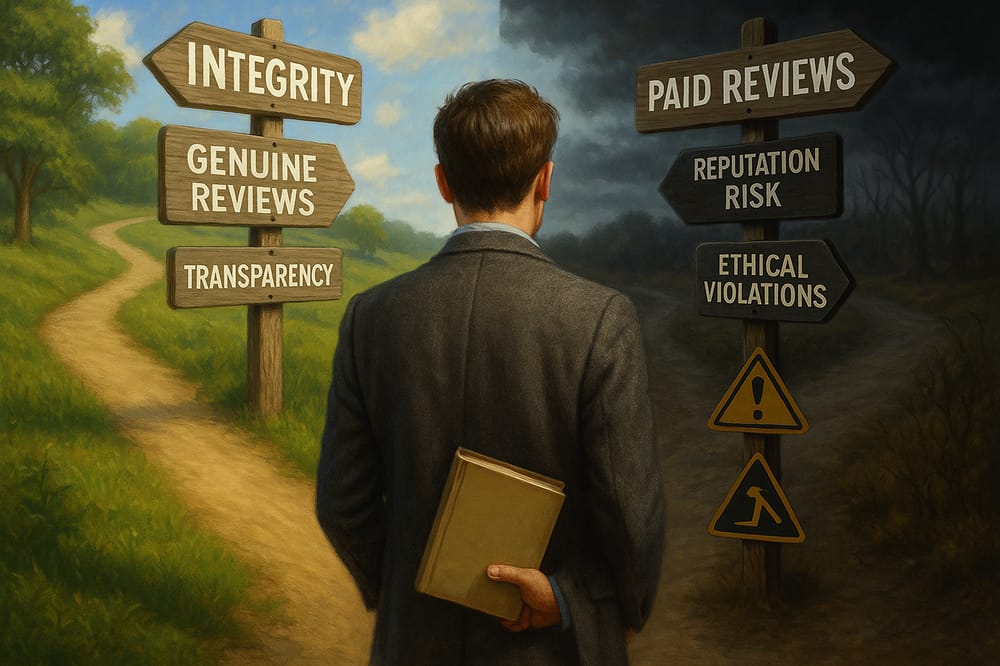
For authors, reviews are an essential part of growing visibility and credibility. A well-placed positive review can spark interest, boost sales, and win over potential readers. While this makes reviews feel like gold, paying for them can do more harm than good. Even though paying for reviews may be legal in some cases, it’s widely considered unethical and can severely damage your reputation as an author.
Here, we'll explore why buying reviews isn’t worth the cost, the importance of transparency, and ethical ways to gather genuine feedback for your book.
The Hidden Dangers of Paid Book Reviews
1. Erodes Trust with Your Readers
Your readers expect honesty. When reviews are bought, they lose their objectivity. If readers discover those glowing recommendations were paid for, they’ll start questioning every aspect of your book. Trust—hard to build and easy to lose—could be wiped away in an instant.
2. Violates Unspoken (and Legal) Ethics
Even if paying for reviews is technically allowed, platforms like Amazon and Goodreads explicitly prohibit it. Violations often result in penalties, such as reviews being deleted or accounts being suspended. Additionally, the FTC (Federal Trade Commission) mandates full disclosure of any exchange (like payment or even a free book) when reviews are written. Failure to comply could lead to legal consequences.
3. Damages Your Reputation
The writing community holds integrity in high regard. Being caught paying for reviews may cause fellow authors, bloggers, and industry influencers to reconsider associating with you. Worse, news spreads fast online, and the repercussions could affect your career for years.
4. Questionable Quality and Effectiveness
Paid reviews often lack depth or authenticity and can appear generic. Readers can spot disingenuous reviews a mile away. Instead of drawing them to your book, these reviews might do the opposite—push potential readers away.
Transparency Is Key
Did you know that even offering a free copy of your book in exchange for a review requires disclosure? According to the FTC guidelines, when a reviewer receives any material value—including a free book—it must be disclosed in their review. For example, reviewers may include statements like, “I received a free copy of this book in exchange for an honest review.”
This transparency builds trust with your audience and complies with legal requirements, ensuring you stay on the right side of ethical practices.
Ethical and Effective Alternatives for Genuine Reviews
The good news? There are ethical ways to get meaningful feedback without risking your integrity. Consider these methods:
1. Leverage Your Reader Community
Your fans—whether few or many—are often excited to support you. Ask your mailing list subscribers or social media followers for reviews in exchange for their early access to your book. Encourage them to share their thoughts but remind them to disclose if they received a free copy.
2. Partner with Book Bloggers and Reviewers
There are countless book bloggers and reviewers who love reading and sharing opinions about new works. Reach out to those who focus on your genre and request a review. Many of them follow proper disclosure practices, keeping the process ethical.
3. Use Author-Friendly Platforms
Sites like NetGalley and BookSirens connect authors with readers and reviewers in a compliant, regulated way. These platforms encourage voluntary, honest feedback while adhering to disclosure standards.
4. Host Giveaways
Running a giveaway is a fun and transparent way to get your book into readers’ hands. Several of the winners may choose to review your book without any obligation.
5. Focus on Word of Mouth
The most authentic reviews often come from natural word-of-mouth recommendations. Sometimes, your best “marketing plan” is simply writing a fantastic book that resonates with people and gives them something to talk about.
Motivating Readers to Review Ethically
Not everyone knows they should add a disclosure when accepting a book for free. When you offer free copies, kindly educate your reviewers. For example, you could include a polite reminder in your outreach email or along with the book itself:
“I’d love to hear your thoughts on [Book Title]! If you choose to leave a review, please remember to include a disclosure about receiving the book for free in your review. This ensures compliance with FTC guidelines and helps maintain transparency with other readers.”
Taking this approach shows you value ethics, transparency, and your readers’ trust—qualities they will likely respect.
Final Thoughts
When tempted to pay for book reviews, remember that trust and credibility are far more valuable than short-term gains. Transparency and honesty will not only protect your reputation but also win you authentic, loyal readers who truly connect with your work.
Building genuine reviews takes time and effort, but it’s an investment worth making. Stay ethical, educate yourself on compliance, and focus on creating an amazing reading experience. The right readers—and reviews—will follow.
Regardless of how you go about getting reviews of your book, the one thing you always need to do is format that book correctly for eReader and Print copies. Vellum allows for this on a Mac with ease, and you will know your book is always presented in the best possible light. You can get a free copy here for evaluation.


Tim Hewitt, Author
Tim is a Freelance Digital Marketer who specializes in helping other marketers to find ways to earn online. When you are frustrated with your prior efforts, Tim will help you find the way!
Copyright © 2026, The Digital Marketing Buzz | All Rights Reserved.