Receive Daily Blog Emails
You agree to receive daily blog emails a link to the full blog contents. You can unsubscribe at any time.
Be Sure To Check Your SPAM Folder For Your Welcome Message and WHITELIST Our Email So It Doesn't Go To SPAM In The Future!
Transactional Sales vs. Transformational Sales: Which One Are You?
Monday, May 05, 2025
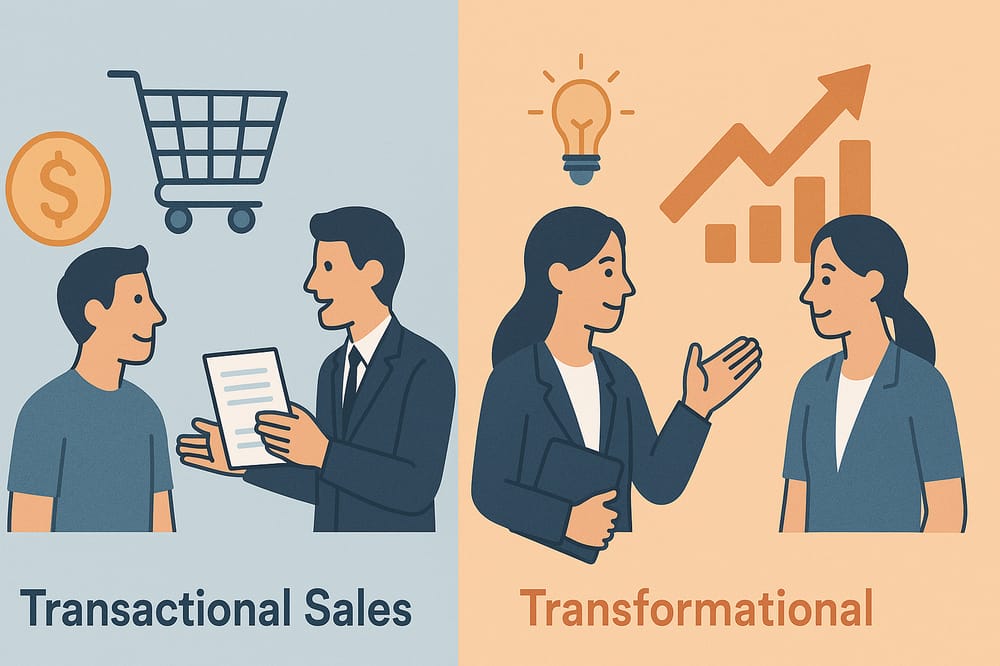
Sales is no longer a "one-size-fits-all" game. For digital marketers, the way you approach sales can either lead to short-term wins or long-term success. However, the key lies in understanding the difference between two fundamental sales methodologies: transactional and transformational sales.
This blog will explore these two sales strategies in detail and help you identify which one aligns with your current marketing or sales approaches. We'll also discuss their strengths, differences, and how you can harmonize both strategies to maximize your results.
By the end of this post, you’ll have a clear roadmap to apply the right methods for your digital sales initiatives.
What Are Transactional Sales?
At its core, transactional sales are straightforward, quick, and focused on meeting immediate needs. The primary goal is to close the deal with minimal fuss. These types of sales often revolve around products or services with lower price points and shorter decision-making cycles.
Some key characteristics of transactional sales include:
- Focus on Price or Convenience: The sale is typically driven by affordability or the convenience of the offer.
- Short-Term Relationship: Once the transaction is completed, there’s usually minimal brand interaction beyond the sale.
- Minimal Customization Needed: Little to no tailoring of the product or service to the customer.
- Volume-driven Approach: Success is usually measured by the number of sales, not the depth of customer engagement.
Examples of Transactional Sales
- An e-commerce store running flash sales for customers browsing for the best price.
- Subscription cancellations where the customer is incentivized with a reduced cost to stay.
- Point-of-sale offers, like quick discounts during checkout to boost impulse purchases.
For digital marketers, transactional sales often leverage direct ads, promotional offers, or PPC campaigns that push for immediate conversions.
What Are Transformational Sales?
Think of transformational sales as the deeper, relationship-focused cousin of transactional sales. Here, the goal is not just to make a sale but to create a long-term partnership based on value, trust, and the customer’s personal or business growth.
Transformational sales emphasize:
- Long-Term Relationships: The goal is to build deeper connections that lead to repeat business or referrals.
- Value-Driven Offers: The focus is on solving pain points or creating meaningful change for the customer.
- Collaborative Approach: This involves tailoring solutions that align with the customer’s unique needs and objectives.
- High ROI for the Customer: Transformational sales create significant value and justify higher price points.
Examples of Transformational Sales
- A marketing agency collaborating with a client to design a custom strategy that aligns with their business goals.
- Software providers offering onboarding services, training, and tailored integrations to ensure product success.
- Content creation tools like HubSpot, which invest in partnerships rather than just selling subscriptions.
Digital marketers that lean toward transformational sales often deploy extensive lead nurturing, thought leadership content, and personalized outreach to build trust and loyalty.
Key Differences Between Transactional and Transformational Sales
While both approaches are legitimate and effective in the right context, understanding their key differences helps you choose the right one for your campaigns:
Aspect
Transactional Sales
Transformational Sales
Approach
Focused on closing the deal quickly
Focused on long-term value creation
Customer Relationship
Minimal interaction after the sale
Ongoing engagement and support
Time Commitment
Short sales cycle
Longer, relationship-building process
Scope
Focused on one-time needs
Tailored to unique customer pain points
Price
Often low price, frequent discounts
Higher price, with emphasis on ROI
Advantages and Disadvantages of Each Strategy
Transactional Sales Pros and Cons
Advantages:
• Speeds up sales cycles.
• Ideal for straightforward, low-cost products or services.
• Works well with new customer acquisition campaigns.
Disadvantages:
• Low customer loyalty or repeat business.
• Relies heavily on ad spend to maintain leads.
• Competes in a crowded market driven by price sensitivity.
Transformational Sales Pros and Cons
Advantages:
• Builds lasting, loyal customer relationships.
• Customers perceive higher value, justifying premium pricing.
• Encourages word-of-mouth marketing and leads.
Disadvantages:
• More resource-intensive and time-consuming.
• Requires a deeper understanding of the customer’s needs.
• Not suitable for every product or service category.
Which One Are You?
Now that you know the basics, it's time to reflect on your own sales strategy. Ask yourself these questions:
1. What type of product or service do I offer?
If it’s a low-cost, needs-based item, a transactional approach might suit you. For high-value, complex solutions, transformational sales are likely the way to go.
2. Who is my target audience?
If your customers are looking for fast, convenient solutions, a transactional strategy can meet their expectations. If they’re seeking reliable partnerships or long-term ROI, opt for a more transformational approach.
3. What are my business goals?
If you're looking to upsell, cross-sell, or scale, transformational sales are a better fit. For growing customer acquisition, transactional sales may be more relevant.
4. Do I have the resources?
Transformational sales require time and collaboration. If resources are limited, you may do better sticking with a transactional strategy.
How Digital Marketers Can Combine Both Strategies
Most successful businesses don’t rely exclusively on one approach. Instead, they combine transactional and transformational sales to maximize their reach, impact, and revenue. Here’s how you can integrate both:
Funnel Segmentation
Segment your sales funnel. Focus on transactional sales for cold leads at the top of your funnel by offering irresistible deals or free trials. Once they’ve warmed up, transition them into a transformational sales strategy with personalized content and tailored solutions.
Highlight Value at All Levels
Use transactional touchpoints to show quick wins, like discounts or product benefits, while consistently weaving in the story of long-term value through case studies, testimonials, and social proof.
Retargeting for Relationship-Building
Retarget customers who made low-commitment purchases (transactional) with upsell opportunities or value-packed offers that encourage deeper engagement (transformational).
Leverage Data for Personalization
Track customer behavior and preferences to identify when a lead is ready to move from transactional touchpoints to a more transformational experience.
Final Thoughts: Finding the Perfect Balance
Whether you lean toward a transactional sales strategy, a transformational strategy, or a blend of both, the key is adaptability. Successful digital marketers understand the unique dynamics of their customers and tailor their approach accordingly.
Take the time to understand your sales process, audience, and available resources. Finding your balance will empower you to deliver the right experiences, increase conversions, and foster lasting business relationships.
Looking to refine your sales approach? Start creating value-driven content, and explore how transformational sales can elevate your strategies and deliver measurable results!
Our flagship training can teach you how to be successful in High Ticket Affiliate Marketing, eLearning & Courses, Events and Masterminds, along with Coaching. These Core Four businesses allow digital marketers to earn online. We can get you started for just $5 with a 5 Day Challenge, and if you are not satisfied, we’ll give you BACK your money! Check it out [at this link] today.
Listen to a Podcast Review of this system as well.
Disclaimer: If you click on links we provide and make a purchase, we may receive compensation. There is never any guarantee of income in any of the links or programs we provide.


Tim Hewitt, Author
Tim is a Freelance Digital Marketer who specializes in helping other marketers to find ways to earn online. When you are frustrated with your prior efforts, Tim will help you find the way!
Copyright © 2026, The Digital Marketing Buzz | All Rights Reserved.