Receive Daily Blog Emails
You agree to receive daily blog emails a link to the full blog contents. You can unsubscribe at any time.
Be Sure To Check Your SPAM Folder For Your Welcome Message and WHITELIST Our Email So It Doesn't Go To SPAM In The Future!
The Power of Pharmaceutical Ads: Lessons for Marketers
Monday, April 27, 2026

Every day, millions of people sit through pharmaceutical commercials that spend a full thirty seconds listing side effects that include nausea, dizziness, internal bleeding, and in some cases... death. Yet somehow, by the end of the ad, many viewers feel good about the product. They feel hopeful. They feel like that medication might just change their life. How does that happen? And more importantly, what can ethical marketers learn from it?
The promise of a better life is central to pharmaceutical advertising - and it works.
The Paradox of the Side-Effect-Laden Ad
Pharmaceutical advertising is one of the most scrutinized forms of marketing in the world. In the United States, the FDA requires that drug ads present a "fair balance" of benefits and risks. This means that for every claim about how a drug can help you, equal airtime must be given to the ways it might harm you. And yet, despite these regulations, pharmaceutical companies spend over $6 billion annually on direct-to-consumer advertising - and it works.
Research consistently shows that patients who see drug ads are more likely to ask their doctors about those medications, and more likely to leave with a prescription. The question isn't whether these ads are effective. The question is why - and what that tells us about the psychology of persuasion.
Strategy #1: Lead With the Life, Not the Drug
The first and perhaps most powerful tactic pharmaceutical advertisers use is to sell the outcome, not the product. You rarely hear an ad open with, "This pill reduces inflammation markers by 14%." Instead, you hear: "Imagine playing with your grandchildren again. Imagine running a 5K. Imagine waking up without pain."
This is results-first marketing at its finest. The product is almost secondary - a vehicle for a life the viewer desperately wants. By anchoring the message in deeply personal aspirations - health, beauty, vitality, connection, success - advertisers bypass the rational mind and speak directly to emotion. The viewer doesn't evaluate the drug; they evaluate the life it promises.

Pharmaceutical ads consistently show the life after the product - confident, radiant, and free.
This is a legitimate and powerful strategy for any marketer. When you lead with the transformation your product enables - rather than its features or specifications - you connect with what your audience truly cares about. A fitness app isn't selling step-tracking algorithms; it's selling the feeling of being the healthiest version of yourself. A skincare brand isn't selling retinol percentages; it's selling confidence.
- Focus your messaging on the transformation, not the transaction
- Use aspirational language that mirrors your customer's inner desires
- Let the product be the bridge - not the destination
Strategy #2: Imagery That Shows Winning
Watch any pharmaceutical commercial carefully and you'll notice a pattern in the visuals: people laughing in sunlit kitchens, couples holding hands on beaches, grandparents chasing toddlers through green backyards, friends clinking glasses at outdoor dinners. Nobody is sitting in a doctor's office looking scared. Nobody is reading the fine print.
This is deliberate. These images aren't chosen randomly - they are carefully selected to communicate a single, consistent message: people who use this product are winning at life. The psychology behind this is rooted in what researchers call "affective conditioning." When positive imagery is repeatedly paired with a product, the viewer begins to associate the product with those positive feelings, even subconsciously.

Imagery of joy, connection, and outdoor freedom is a staple of pharmaceutical visual storytelling.
For ethical marketers, this is a reminder of how powerful visual storytelling truly is. The images you choose are not decoration - they are arguments. They make claims about who your customer will become when they use your product. Ask yourself: do your visuals show the customer as the hero? Do they depict success, joy, and belonging? Or are they generic stock photos that communicate nothing emotionally meaningful?
The key ethical consideration here is authenticity. Pharmaceutical ads sometimes stretch the truth by showing impossibly perfect lives. Ethical marketers should show real wins - real customers, real results, real moments of joy that their product genuinely enables. The imagery should be aspirational but honest.
- Choose images that show your customer as the hero of their own story
- Use authentic, relatable visuals over polished perfection
- Every visual should reinforce your core emotional promise
- Test imagery with real audiences - emotions are measurable
Strategy #3: Music and Pacing as Emotional Architecture
Here is where pharmaceutical advertising gets genuinely fascinating - and a little unsettling. The moment the voiceover begins listing side effects, something remarkable happens to the ad's production design. The music shifts to something soft and lilting. The visuals slow down. The narrator's voice becomes warm and reassuring, almost like a lullaby. The editing pace relaxes.
This is not accidental. It is a deliberate strategy to manage emotional state during the delivery of frightening information. By pairing the risk disclosure with calming sensory cues, advertisers essentially tell the viewer's nervous system: "This information is not a threat. You are safe. Everything is fine." The rational content (side effects) is delivered in an emotional wrapper (serenity) that neutralizes its impact.
Soft lighting and peaceful scenery are deployed strategically during risk disclosures to keep viewers emotionally calm.
Neuroscience research supports this. Studies show that background music significantly influences how people process and remember information. Slow, major-key music increases positive affect and reduces anxiety. When people feel calm and safe, they are more receptive to persuasion and less likely to critically evaluate the information they're receiving.
For marketers, the lesson is profound: the emotional context in which you deliver information shapes how that information is received. This applies to everything from the background music on your website to the pacing of your video content to the color palette of your landing pages. Calm, warm, and measured environments increase trust and receptiveness.
The Ethics Question: Where Is the Line?
It would be easy to read this analysis and conclude that pharmaceutical advertising is simply manipulation dressed up in soft lighting and acoustic guitar. And honestly? Sometimes it is. Critics rightly point out that the same techniques that make a drug seem appealing can also make genuinely dangerous medications seem safer than they are. When a 30-second ad spends 20 seconds on a sun-drenched beach and 10 seconds speed-reading through a list of potentially fatal side effects, the "fair balance" required by law is technically present - but functionally absent.
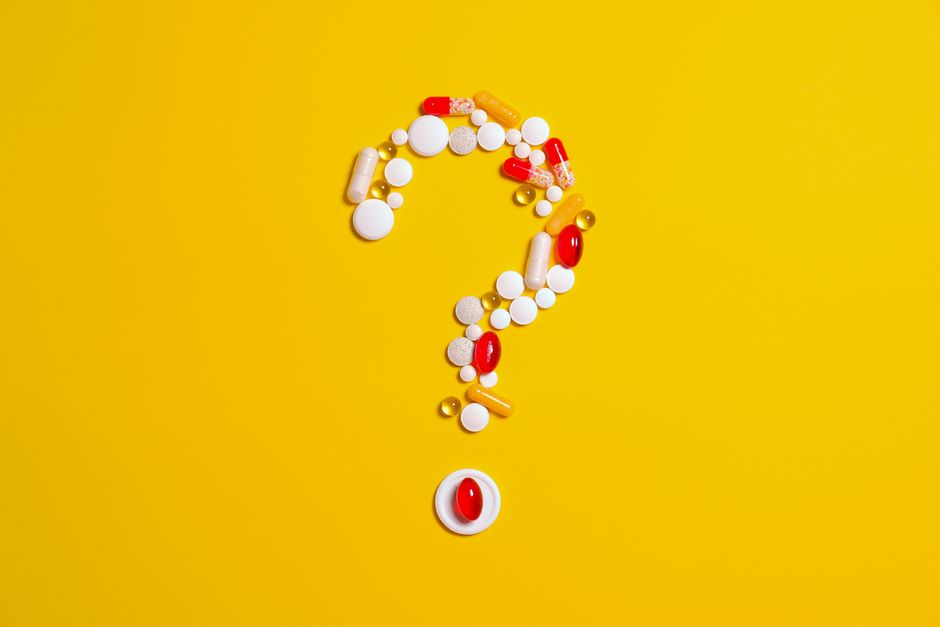
Ethical marketing requires that we pause and ask: are we informing, or are we engineering perception?
But the existence of unethical applications does not invalidate the underlying psychological principles. The same understanding of human emotion that pharmaceutical companies use to obscure risks can be used by ethical marketers to genuinely communicate value. The difference lies in intent and honesty.
Ethical application means:
- Emphasizing real benefits- not inventing or exaggerating outcomes your product cannot genuinely deliver
- Using emotional cues to support truth- not to distract from it or bury inconvenient facts
- Showing authentic customer experiences- not casting models to perform emotions your customers don't actually feel
- Making disclosures legible- not speed-reading disclaimers or burying them in fine print
- Respecting your audience's intelligence- trusting that a well-informed customer who genuinely benefits from your product is more valuable than a manipulated one
What Every Marketer Should Take Away
Pharmaceutical advertising, for all its ethical complexity, is a masterclass in applied psychology. It demonstrates with uncomfortable clarity that human decision-making is not primarily rational - it is emotional, contextual, and deeply influenced by sensory cues that most of us don't consciously notice.
The next time you watch one of these commercials, try to observe it analytically. Notice when the music changes. Notice which visuals appear during the risk disclosure versus the benefit claims. Notice the pacing, the color grading, the demographic of the actors, the setting of each scene. You will start to see a sophisticated emotional architecture that has been carefully constructed to guide your feelings - and ultimately your behavior.

Great marketing is built on emotional intelligence - understanding not just what people think, but how they feel.
Then ask yourself: what emotional architecture am I building in my own marketing? What does my imagery say about who my customer will become? What does my music - or the absence of it - communicate about my brand's personality? What emotional state am I creating when I deliver important information, including any limitations or caveats about my product?
These are not manipulative questions. They are the questions of a marketer who understands that communication is never purely informational - it is always emotional. The brands that understand this, and use it responsibly, are the ones that build lasting trust, genuine loyalty, and the kind of word-of-mouth that no ad budget can buy.
A Final Reflection
The effectiveness of pharmaceutical advertising - even in the face of terrifying side effect lists - should not make us cynical about marketing. It should make us more thoughtful about it. Human beings are emotional creatures who respond to stories, images, music, and sensory context in ways that are deep, consistent, and measurable. That is not a flaw to be exploited. It is a truth to be honored.
The most powerful marketing doesn't trick people into wanting something they don't need. It helps people recognize - emotionally and viscerally - why something they genuinely need is worth their attention. Done ethically, with honesty and respect, that is not manipulation. That is communication at its highest form.
To see a real marketing genius in action, check out Russell Brunson's Selling Secrets webinar. You won't be disappointed.
What emotional cues are you currently using in your marketing? Take a moment to review your last three pieces of content - not for what they say, but for how they make people feel. You might be surprised by what you find.


Tim Hewitt, Author
Tim is a Freelance Digital Marketer who specializes in helping other marketers to find ways to earn online. When you are frustrated with your prior efforts, Tim will help you find the way!
Copyright © 2026, The Digital Marketing Buzz | All Rights Reserved.