Receive Daily Blog Emails
You agree to receive daily blog emails a link to the full blog contents. You can unsubscribe at any time.
Be Sure To Check Your SPAM Folder For Your Welcome Message and WHITELIST Our Email So It Doesn't Go To SPAM In The Future!
The Billionaire Scam You Can’t Afford to Miss
Saturday, August 09, 2025
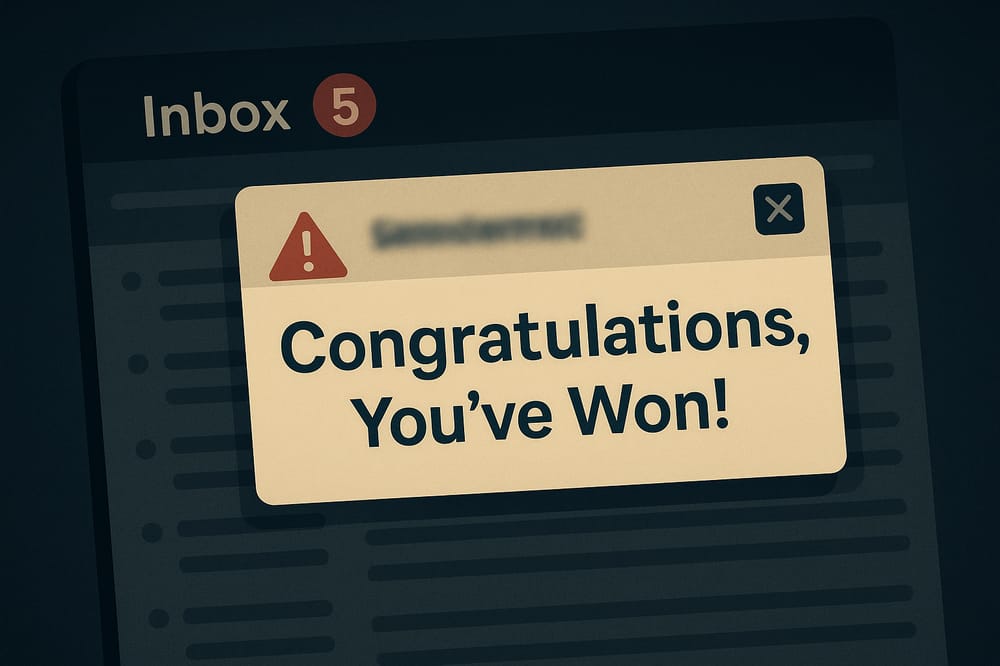
Picture this: You open your inbox to find what looks like the opportunity of a lifetime. A so-called billionaire philanthropist has “handpicked” you to receive a whopping $1 million donation. Sounds too good to be true, right? That’s because it is. Yet, thousands of people fall for scams like these every year, losing not just money but also peace of mind.
Scam emails have become increasingly sophisticated, preying on our hopes, fears, and even our good nature. Today, we're breaking down one of the most viral email scams of 2025—a scheme that fraudulently promises life-changing money while trying to empty your bank account. Stick with us as we uncover the red flags and arm you with the knowledge you need to stay safe online.
Anatomy of the “Billionaire Donation” Scam
At first glance, this scam email is designed to appear heartfelt, professional, and downright irresistible. Here's how it unfolds and why so many people get tricked by it:
The Setup
The email typically arrives with an eye-catching subject line like “Congratulations! You’ve Been Selected for a $1 Million Donation”. It claims to come from the office of a renowned billionaire—often a celebrity entrepreneur known for their philanthropy. The sender might even include a logo, tagline, or contact information to make it look legitimate.
Here’s an example:
Subject: Your $1 Million Donation From [Famous Billionaire’s Name]
Body:
Dear [Your Name],
Congratulations! I’m thrilled to inform you that I, [Billionaire’s Name], have chosen YOU to receive a $1 million personal donation as part of a private philanthropic initiative to give back to society.
All you have to do is reply to this email with the following details:
- Full name
- Address
- Phone number
- Bank account information for the funds transfer
Once confirmed, you’ll receive your $1 million within 5 business days!
Best regards,
[Billionaire’s Name]
It’s polished, promising, and engineered to make recipients feel special. But beneath the surface, the cracks in this facade quickly appear.
The Red Flags
While the scammers try hard to make the email convincing, there are telltale warning signs woven into its structure. Here’s what to look for:
1. Unrealistic Promises
Anytime someone offers something valuable for free—whether it’s a massive sum of money, a luxury car, or a dream vacation—you should immediately question it. Billionaires don’t just hand out cash to random strangers via email.
2. Urgent Language
Phrases like “Act now,” “Limited time offer,” or “Reply immediately” are classic scare tactics to rush victims into action before thinking critically.
3. Personal Information Requests
Asking for sensitive details like your bank account information, home address, or Social Security number is a glaring red flag. Legitimate philanthropy organizations would never operate this way.
4. Generic Greeting
Despite claiming you were “handpicked,” the email usually addresses you generically—“Dear Sir/Madam” or just your email address. That’s a clear indicator the sender doesn’t know you at all.
5. Questionable Sender Address
Check the sender's email address closely. It’s often a nonsensical mix of letters and numbers, or it might use a domain name that doesn’t align with the purported billionaire’s actual business.
6. Grammatical Errors
Many scam emails feature awkward wording, typos, or grammar mistakes. A legitimate communication from a billionaire’s office wouldn’t have these errors.
Why This Scam Works
Scammers aren’t just playing on your hopes of financial freedom—they are also exploiting the desire to believe in acts of generosity. By mimicking well-known figures and crafting plausible scenarios, they gain your trust just long enough to execute their con.
Once victims share their personal information, scammers may drain their bank accounts, steal identities, or even use the details for future phishing attacks.
Stay Ahead of Scammers
Arm yourself with these practical steps to stay one step ahead of email fraudsters.
Actionable Tips to Protect Yourself
1. Verify the Sender
If you receive an unexpected email from a public figure or company, don’t just rely on the name. Examine the full email address for inconsistencies or unusual domains.
2. Avoid Sharing Personal Information
Never submit sensitive data (like your bank details or Social Security number) over email—no matter how legitimate the request seems.
3. Spot Fake Links
Hover over any links before clicking. Look out for URLs that differ subtly from the official website. Scammers often replace letters with numbers (e.g., “amaz0n.com” instead of “amazon.com”).
4. Trust Your Instincts
If a deal or offer feels too good to be true, it probably is. Listen to your gut and do your research before responding.
5. Use Email Filters
Adjust your email settings to filter potential phishing attempts into your spam folder. Most email providers have tools to block suspicious senders.
6. Report Suspicious Emails
Forward scam emails to your country’s designated fraud reporting agency (such as [email protected] in the U.S.). Reporting scams helps protect you and others.
7. Enable Two-Factor Authentication
Protect your accounts by using two-factor authentication (2FA). Even if scammers gain access to your email login, 2FA adds another layer of security to block them.
Final Thought
Your inbox doesn’t have to be a battleground. By arming yourself with awareness and knowing the signs of a scam, you can avoid falling victim to even the most convincing fraudsters. The next time an email offers you millions, you’ll know exactly what to do—hit delete.
Be sure to subscribe to our blog posts (link on top of the page) to get a daily email with the marketing hints and tips your business needs to be successful.
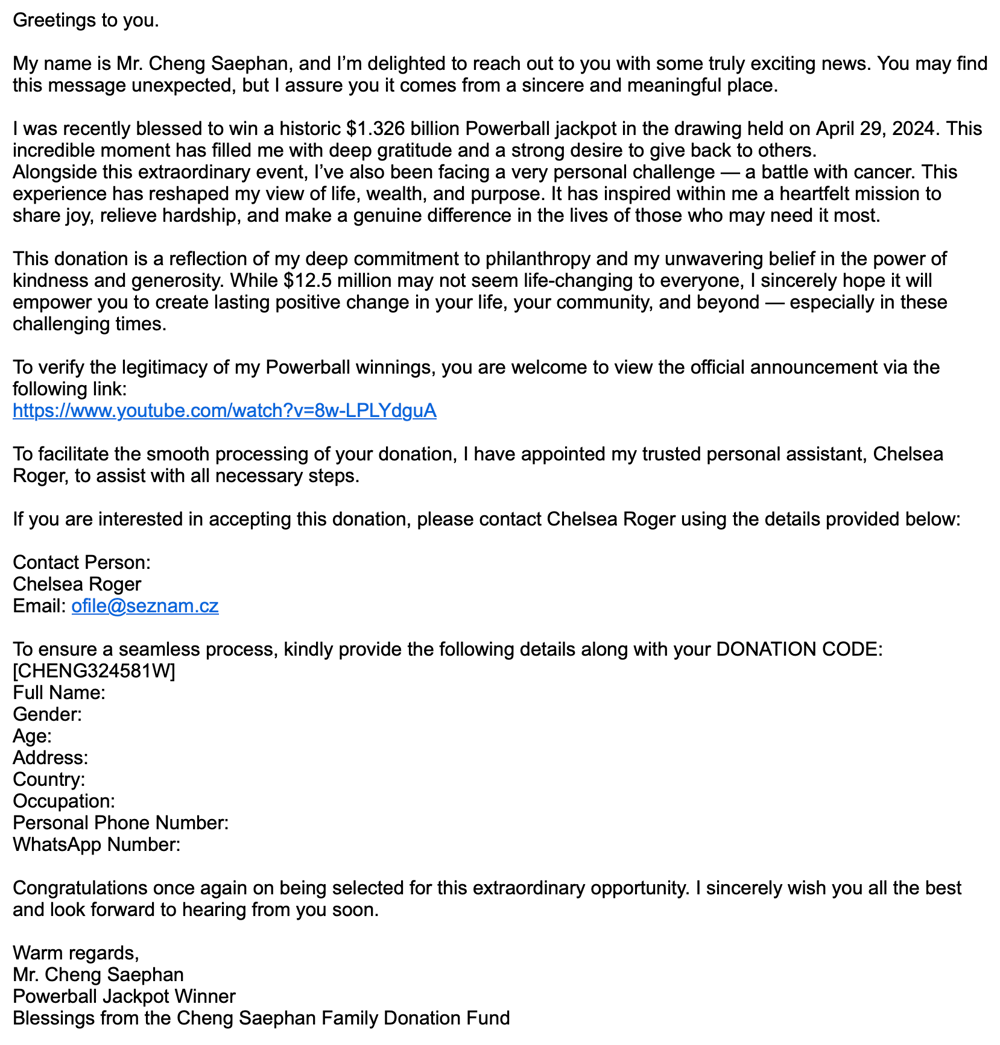
What follows is the actual email that prompted me to write this particular blog post.
You can see all the hallmarks of the scam buried in the "marketing" messaging that this email contains. Learn why this pulls at people, and understand more of what marketing works to get people to click your link!


Tim Hewitt, Author
Tim is a Freelance Digital Marketer who specializes in helping other marketers to find ways to earn online. When you are frustrated with your prior efforts, Tim will help you find the way!
Copyright © 2026, The Digital Marketing Buzz | All Rights Reserved.