Receive Daily Blog Emails
You agree to receive daily blog emails a link to the full blog contents. You can unsubscribe at any time.
Be Sure To Check Your SPAM Folder For Your Welcome Message and WHITELIST Our Email So It Doesn't Go To SPAM In The Future!
Stop Begging for Clicks: Unlock REAL Website Traffic
Monday, June 02, 2025
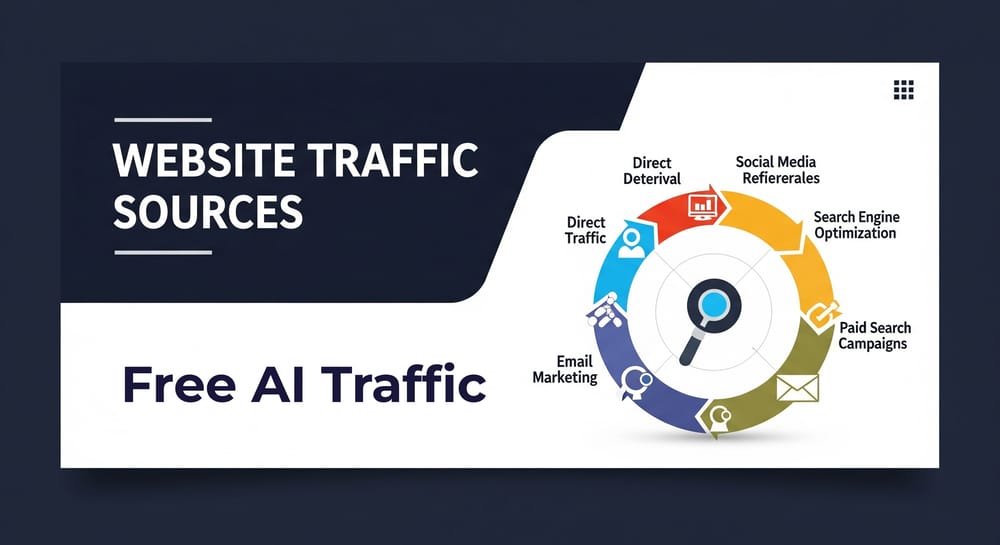
Driving traffic to your website or funnel effectively isn't about doing one thing; it's about a strategic combination of methods tailored to your audience and goals. The "most effective" approach usually involves a mix of channels that deliver both immediate results and long-term sustainable growth.
Here are the most effective ways, broken down by category:
1. Search Engine Optimization (SEO) - The Long Game for High-Intent Traffic
Why it's effective: SEO brings in organic (free) traffic from people actively searching for solutions you offer. This traffic is high-intent, meaning they are often further along in their buying journey. It builds credibility and brand authority over time.
Key Tactics:
- Keyword Research: Identify what your target audience is searching for. Focus on long-tail keywords (more specific phrases) for easier ranking and higher conversion intent.
- On-Page SEO: Optimize your website content, meta descriptions, title tags, headings, and images for relevant keywords. Ensure your content directly answers user queries.
- Technical SEO: Make sure your site is fast, mobile-friendly, secure (HTTPS), and easily crawlable by search engines (XML sitemaps, clear site structure).
- Content Creation: Produce high-quality, valuable, and comprehensive blog posts, articles, guides, and videos that rank for your target keywords and establish you as an authority.
- Link Building (Off-Page SEO): Earn high-quality backlinks from reputable websites. This signals to search engines that your site is trustworthy and authoritative.
- Local SEO: If you have a physical location or serve a specific geographic area, optimize your Google My Business profile and target local keywords.
2. Paid Advertising (PPC) - Instant, Scalable, and Highly Targeted
Why it's effective: PPC allows you to get immediate visibility and traffic. You can target specific demographics, interests, behaviors, and even search queries, ensuring your ads are seen by your ideal audience. It's highly measurable and scalable.
Key Tactics:
- Google Ads (Search & Display):
- - Search Ads: Appear at the top of search results for specific keywords (e.g., "best CRM software"). Captures immediate intent.
- - Display Ads: Appear on websites and apps across the Google Display Network. Great for brand awareness and remarketing.
- - Shopping Ads: For e-commerce, directly display products in Google Search results.
- Social Media Ads (Meta Ads, TikTok Ads, LinkedIn Ads, Pinterest Ads, X Ads):
- - Leverage platforms like Facebook, Instagram, TikTok, LinkedIn, and Pinterest for highly visual and interest-based targeting. Great for building awareness, driving leads, and direct sales through compelling creatives.
- - Retargeting/Remarketing: Show ads specifically to people who have already visited your website or engaged with your content. This is often the highest ROI ad strategy.
- Audience Targeting: Utilize demographic, interest, behavioral, custom audiences, and lookalike audiences to pinpoint your ideal customers.
- Solo Ads: Purchase clicks to your offer from a targeted email list. These are cold leads and need to be nurtured before they become buyers.
3. Content Marketing - Building Authority & Nurturing Audiences
Why it's effective: Content marketing educates, entertains, and solves problems for your audience. It builds trust and loyalty, naturally drawing people to your site and funnel over time. It also fuels your SEO and social media efforts.
Key Tactics:
- Blogging: Consistent, high-quality blog posts that answer questions, provide value, and target relevant keywords.
- Video Marketing: YouTube, TikTok, Instagram Reels, and long-form video are powerful for engagement and explanation. Videos can drive significant traffic and build strong connections.
- Podcasting: Attracts an audience that prefers audio content, building deeper relationships and driving listeners to your site.
- Lead Magnets: Create valuable, free resources (eBooks, templates, checklists, webinars, courses) that solve a specific problem for your audience. Promote these heavily to capture emails and drive traffic into your funnel.
- Infographics & Visual Content: Easily digestible and shareable content that can go viral and drive traffic.
4. Social Media Marketing - Engagement, Community, & Direct Traffic
Why it's effective: Social media is where your audience spends a lot of their time. It's crucial for building brand awareness, fostering community, driving direct clicks, and acting as a distribution channel for your content.
Key Tactics:
- Consistent Posting: Share valuable content (articles, videos, tips, behind-the-scenes) regularly on platforms relevant to your audience.
- Engagement: Don't just broadcast. Respond to comments, ask questions, run polls, and participate in relevant conversations.
- Community Building: Create groups (e.g., Facebook Groups, Discord servers) where your audience can connect with each other and your brand. This builds loyalty and repeat traffic.
- Influencer Marketing: Collaborate with influencers whose audience aligns with yours to get your content or offers in front of new, relevant eyes.
- Short-Form Video (TikTok, Reels, Shorts): Currently the most viral format for organic reach. Use trends, educate, and entertain to drive profile clicks to your link in bio.
5. Email Marketing - Your Most Valuable Asset for Repeat Traffic
Why it's effective: Once you have someone's email, you have direct access to their inbox. This is incredibly powerful for nurturing leads, driving repeat traffic to new content or offers, and building customer loyalty. It has one of the highest ROIs in marketing.
Key Tactics:
- Compelling Lead Magnets: Offer irresistible value in exchange for an email address (e.g., a free guide, checklist, mini-course).
- Welcome Sequences: Automated email series that introduce your brand, provide immediate value, and guide new subscribers to your core offerings.
- Newsletters: Regular emails with valuable content, updates, and soft promotions that keep your audience engaged and coming back to your site.
- Promotional Emails: Strategic campaigns announcing new products, sales, or exclusive offers.
- Segmentation: Divide your email list into smaller groups based on interests, behavior, or demographics to send highly relevant messages.
6. Partnerships & Collaborations - Tapping into New Audiences
Why it's effective: Collaborating with other businesses or individuals who serve a similar (but non-competing) audience allows you to tap into established trust and reach new people.
Key Tactics:
- Guest Blogging: Write articles for other relevant websites, including a link back to your site.
- Joint Webinars/Workshops: Co-host events with partners to cross-promote to each other's audiences.
- Affiliate Marketing: Recruit affiliates who earn a commission for driving sales to your site.
- Cross-Promotions: Share each other's content, products, or services through social media, email lists, or joint campaigns.
- Podcasts: Guest on Podcasts in your niche. If you have your own podcast, swap host and guest roles.
Choosing the Right Mix:
The "most effective" strategy isn't one-size-fits-all.
- Know Your Audience: Where do they hang out online? What problems do they need solved?
- Define Your Goal: Are you looking for immediate sales, long-term brand building, lead generation, or all of the above?
- Measure Everything: Use analytics (Google Analytics, funnel software dashboards) to track which channels are actually driving qualified traffic and conversions. Optimize continuously!
By focusing on a blend of these strategies, you can build a robust system for consistently driving valuable traffic to your website or funnel.
What about AI search?
This is indeed signifying a massive shift. While it may not directly drive traffic in the same volume of clicks as traditional organic search or paid ads, optimizing for it is increasingly becoming a critical part of a holistic digital marketing strategy for visibility, brand building, and influencing direct responses. It's the next frontier of making sure your content gets seen, even if the user journey changes from a click to a direct answer.
My earlier answers focused on direct traffic drivers, but a more advanced discussion on digital marketing effectively needs to incorporate the nuances of AI's impact on content visibility and brand presence, even if it means fewer immediate clicks.
Here are some of the emerging topics:
1. The "Zero-Click" Phenomenon:
Many AI search results aim to provide a comprehensive answer directly within the AI interface, reducing the need for a user to click through to a website. If the AI provides the complete answer, the direct click to your site is often eliminated. This is the core reason it doesn't fit neatly into "driving traffic" in the same way SEO or PPC does for direct clicks.
2. It's More About "Visibility" and "Influence" Than Direct Clicks (for now):
While AI Overviews and chat tools might provide a summary, they often cite sources or sometimes even include direct links. The goal for AI search isn't just clicks, but about ensuring your brand and content are:
Even if a user doesn't click, seeing your brand mentioned in an AI-generated answer builds awareness and trust.
If your content is comprehensive and well-structured, it's more likely to be used by AI models to form their answers.
Some studies suggest that when users do click from an AI Overview, they are more engaged and have higher intent because they've already received context.
3. The Evolution of "SEO" into "AISO" (AI Search Optimization):
The strategies for getting into AI-generated answers are still evolving, but they heavily leverage and extend traditional SEO best practices. It's less about exact keyword density and more about:
AI models prioritize content from credible, authoritative sources. Building your brand's authority (which traditional SEO helps with) is paramount.
AI models favor content that provides clear, direct answers to questions, often in formats like FAQs, lists, and definitions.
This helps AI understand your content's context and entities, making it easier for them to use your information.
Providing deep, nuanced answers on a topic makes your content a rich resource for AI.
4. It's a Complement, Not Yet a Full Replacement:
While AI search is gaining traction, traditional search engines (and the direct clicks they provide) are still dominant for many types of queries, especially commercial or transactional ones. AI search often serves informational queries.
Now all that said, would it surprise you if we have discovered how to crack the AI Search response to drive traffic to your website or funnel?
We have, and you can see how we do this in the Free Tsunami Traffic video at [this link].
Check it out, and see where this whole world is headed!


Tim Hewitt, Author
Tim is a Freelance Digital Marketer who specializes in helping other marketers to find ways to earn online. When you are frustrated with your prior efforts, Tim will help you find the way!
Copyright © 2026, The Digital Marketing Buzz | All Rights Reserved.