Receive Daily Blog Emails
You agree to receive daily blog emails a link to the full blog contents. You can unsubscribe at any time.
Be Sure To Check Your SPAM Folder For Your Welcome Message and WHITELIST Our Email So It Doesn't Go To SPAM In The Future!
Should Authors Use AI Voices in Their Audiobooks?
Sunday, August 10, 2025
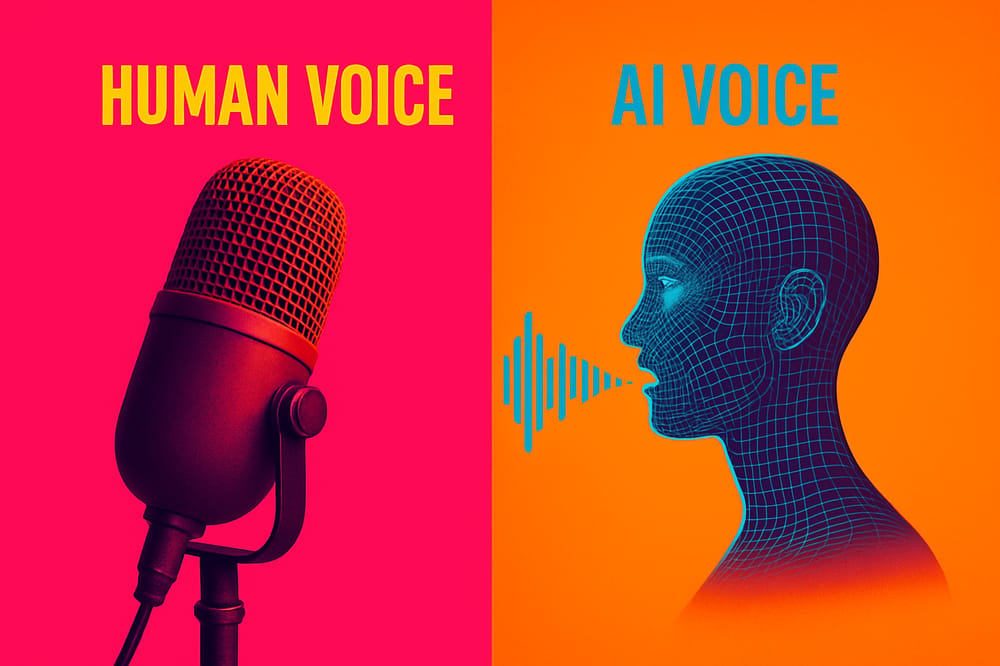
Audiobooks are a growing segment in publishing, offering a convenient way for readers to enjoy stories on the go. With advancements in AI voice technology, authors now face the decision of whether to use AI-generated voices for their audiobooks or stick with traditional human narrators. This post explores the pros, cons, and considerations to help authors make an informed choice.
The Case for AI Voices in Audiobooks
AI voice technology has moved far beyond robotic tones of the past. Today, AI voices are indistinguishable from human ones in many cases and are increasingly accepted by all major audiobook publishers. Here are the key advantages of using AI-generated voices:
1. Cost-Effectiveness
Hiring professional voice actors can be costly, especially for authors on a tight budget. AI voices significantly reduce production costs, making audiobooks more accessible to independent writers and publishers.
- Example: A human narrator might charge $1,000-$3,000 for a 10-hour audiobook. An AI solution could cost a fraction of that.
2. Speed and Efficiency
AI narrators are incredibly fast. Unlike humans, AI needs no breaks, retakes, or time off, allowing books to be ready for release in hours rather than weeks or months.
NB: Do NOT under estimate the time to create an AI Audio Book however. The first rendering of a chapter is rarely correct, so editing and regenerating the audio while listening to the entire book multiple times one paragraph or chapter at a time can take 4-5x the finished length of the book. Judge your time and cost savings accordingly.
- For authors working with tight deadlines, this speed can still be a game-changer.
3. Accessibility for All Budgets
For new authors entering the market, producing audiobooks affordably is crucial. AI technology enables a level playing field, giving more writers a chance to compete with established names.
4. Customization Options
Most AI tools allow authors to select voices, accents, and tones that fit their story. This flexibility ensures that the narration aligns with the author’s vision. The voice can even be a clone of the author's own voice.
5. Scalability
Authors who plan to publish multiple audiobooks or work in different languages can use AI voices to scale efficiently. AI can create translations and narrations across languages without the need for multiple human narrators.
The Downsides of Using AI Voices
While there are clear benefits, AI narration is not without its limitations. Here are the primary concerns authors should consider:
1. Lack of Emotional Depth
One of the biggest criticisms of AI voices is their inability to fully capture the emotional nuances that a human narrator brings to the table. Though this too is gradually improving over time.
- A heartfelt monologue or suspenseful moment might sound flat when delivered by AI, potentially diminishing the listener's experience.
2. Authenticity Matters
Listeners often connect with the authenticity and emotion of a human voice. For memoirs or deeply personal works, AI narration may not convey the same level of connection.
- This could impact audience engagement or reviews, particularly if your target readers expect a personalized touch.
3. Potential for Ethical Pushback
Although AI-generated voices are widely accepted now, some readers and industry professionals prefer to support human artists. This ethical concern could influence purchasing decisions. One interesting side note. A number of highly respected voice actors have cloned their voices in conjunction with the best AI Audio text to speech generators, so they are earning in this new era as well.
4. Learning Curve for Self-Publishing
Authors who choose AI must familiarize themselves with the technology. While tools are user-friendly, they require time to learn, select the right voice, and fine-tune for optimal results.
5. Limited Creative Intuition
Human narrators often collaborate with authors, bringing their own interpretations and creative flair to the narration. This layer of creative input can be lost with AI.
The Current Landscape for AI Voices
Today, major audiobook publishers accept AI-generated voices, signaling industry support for this emerging technology. Many tools, such as ElevenLabs, Speechify and DeepZen, offer high-quality solutions designed specifically for authors. This shift suggests that AI-powered narration is no longer a fringe option but a legitimate choice for authors of all budget levels.
Is AI Narration Right for Your Audiobook?
Ultimately, deciding to use AI voices comes down to understanding your project and audience. Consider these factors:
Use AI Voices If:
- You’re a first-time author working with a small budget.
- Your book doesn’t rely heavily on emotional narration (e.g., non-fiction or instructional books).
- You need a quick turnaround and simple production process.
- You want accessibility in multiple languages without significant costs.
Stick with Human Narration If:
- Your book is character-driven or heavily emotional.
- You have the budget to work with skilled voice actors.
- Connecting authentically with your audience is central to your branding.
- You prefer a more collaborative process with narrators.
A Balanced Perspective
AI narration is revolutionizing the audiobook industry by making it more accessible and cost-effective. However, it’s not a one-size-fits-all solution. While AI can be a practical choice for some authors, others may find that only a human voice captures the depth and emotion of their story.
The good news is that authors no longer face an all-or-nothing choice. Some platforms allow a mix, such as AI for non-dialogue portions and human voices for dramatized scenes. If you’re willing to experiment, combining AI and human narration could be the perfect solution to balance cost, quality, and authenticity.
Final Thoughts
Whether you choose AI or a human narrator, the key is to focus on delivering an engaging audiobook experience for your listeners. By weighing your budget, goals, and the nature of your content, you can make the right choice for your project—and your audience.


Tim Hewitt, Author
Tim is a Freelance Digital Marketer who specializes in helping other marketers to find ways to earn online. When you are frustrated with your prior efforts, Tim will help you find the way!
Copyright © 2026, The Digital Marketing Buzz | All Rights Reserved.