Receive Daily Blog Emails
You agree to receive daily blog emails a link to the full blog contents. You can unsubscribe at any time.
Be Sure To Check Your SPAM Folder For Your Welcome Message and WHITELIST Our Email So It Doesn't Go To SPAM In The Future!
Marketing Sensitivity: Lessons from Mars
Thursday, February 05, 2026
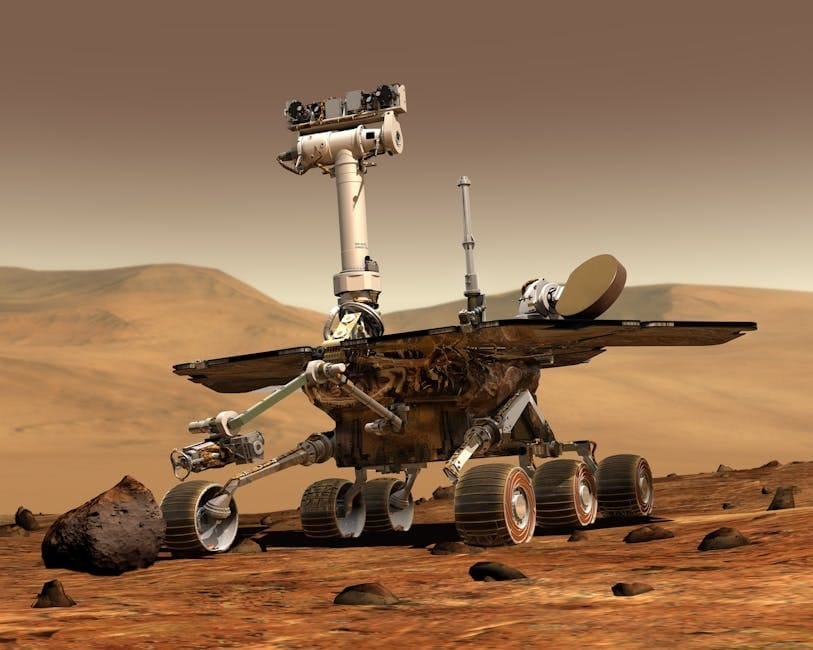
In 1976, NASA landed two Viking spacecraft on the Martian surface. Both carried identical instruments designed to detect signs of life. One probe returned data that scientists dismissed as inconclusive. The other? It sparked decades of debate that continues to this day. The difference wasn't in the Martian soil they tested - it was in the sensitivity of their measurements.
This story from the red planet holds a powerful lesson for marketers navigating the complex terrain of testing and optimization. The sensitivity of your tests—how finely tuned they are to detect meaningful changes - can mean the difference between breakthrough insights and missed opportunities.
The Viking Paradox: When Sensitivity Makes All the Difference
The Viking landers conducted three biology experiments on Martian soil. The Labeled Release experiment, designed by Dr. Gilbert Levin, was exquisitely sensitive - it could detect metabolic activity at levels far below what other instruments could measure. When it returned positive results suggesting biological activity, the scientific community was stunned.
But here's where it gets interesting: the other experiments, with their lower sensitivity thresholds, found nothing. The Gas Chromatograph Mass Spectrometer couldn't detect organic molecules at all. Scientists faced a dilemma - trust the highly sensitive test that showed life, or trust the less sensitive tests that showed nothing?
The consensus? The sensitive test must have been wrong. For decades, the scientific establishment dismissed Levin's results. Only recently, with more advanced instruments, have researchers begun to reconsider - finding that the original sensitive test may have been right all along.
Your Marketing Tests Are Landing on Mars Every Day
Every time you run an A/B test, launch a new campaign, or analyze user behavior, you're essentially sending a probe into unknown territory. And just like NASA's Viking missions, the sensitivity of your instruments determines what you'll discover.

Consider these common marketing scenarios:
- Ad Click Testing: You're comparing two headlines. A low-sensitivity test might require a 20% difference in click-through rates to declare a winner. A high-sensitivity test could detect a meaningful 3% improvement - the kind that compounds into significant revenue over millions of impressions.
- Lead Generation Forms: Testing form length? A crude test might tell you "shorter is better." A sensitive test reveals that removing the phone number field increases submissions by 12%, but adding a company size dropdown actually improves lead quality by 34%.
- User Behavior Analysis: Low-sensitivity tracking shows users "bounce" from your pricing page. High-sensitivity analysis reveals they spend 47 seconds reading the enterprise tier before leaving—a signal they want more information, not less.
The Goldilocks Zone of Testing Sensitivity
Here's where the Mars metaphor gets even more relevant. NASA learned that sensitivity isn't just about cranking instruments to maximum. The Curiosity rover, which landed in 2012, was designed with carefully calibrated sensitivity - precise enough to detect trace organics, but not so sensitive that it would trigger false positives from Earth-based contamination.

Marketing tests need the same calibration. Too sensitive, and you'll chase statistical noise, optimizing for random fluctuations that don't represent real user preferences. Not sensitive enough, and you'll miss the subtle signals that separate good campaigns from great ones.
The right sensitivity depends on your context:
- High-traffic websites can afford more sensitive tests - you'll reach statistical significance faster and can detect smaller improvements.
- B2B companies with longer sales cycles need tests sensitive to early-funnel signals, not just final conversions.
- E-commerce businesses should calibrate sensitivity to their average order value - a 2% conversion lift means different things for $20 products versus $2,000 products.
- Startups with limited traffic should focus on detecting large effects first, then increase sensitivity as they scale.
Practical Steps to Calibrate Your Marketing Sensitivity
NASA doesn't launch missions without extensive calibration. Your marketing tests deserve the same rigor. Here's how to find your Goldilocks zone:
1. Define Your Minimum Detectable Effect
Before running any test, ask: "What's the smallest improvement that would actually matter to our business?" If a 1% conversion increase translates to $50,000 in annual revenue, your test should be sensitive enough to detect it. If it only means $500, you might accept lower sensitivity and faster decisions.
2. Layer Your Measurements
The Viking landers didn't rely on a single experiment. They ran multiple tests with different sensitivity levels. Your marketing should too. Track macro-conversions (purchases, sign-ups) alongside micro-conversions (scroll depth, time on page, button hovers). The combination tells a richer story than any single metric.
3. Account for Noise in Your Environment
Mars has dust storms that can interfere with sensitive instruments. Your marketing environment has its own noise - seasonal fluctuations, competitor actions, news events. Build in controls and run tests long enough to average out environmental interference.

The Cost of Getting Sensitivity Wrong
Remember the Viking controversy? For nearly 40 years, the scientific community may have ignored evidence of Martian life because they trusted less sensitive instruments over more sensitive ones. The cost? Decades of misdirected research and billions in missions designed around the wrong assumptions.
In marketing, the stakes might seem lower, but the pattern is the same. Companies that run insensitive tests make decisions based on incomplete data. They abandon winning strategies because the tests couldn't detect their success. They double down on losing tactics because the tests couldn't reveal their failure.
Meanwhile, companies with well-calibrated testing sensitivity accumulate small advantages. A 3% improvement here, a 5% lift there - these compound over time into insurmountable competitive advantages.
Your Mission: Recalibrate Your Instruments
The next Mars mission, scheduled for the late 2020s, will carry the most sensitive life-detection instruments ever sent to another planet. Scientists learned from Viking. They understand that sensitivity isn't just a technical specification - it's the difference between discovery and disappointment.

Your marketing deserves the same evolution. Take time this week to audit your testing infrastructure:
- Are your sample sizes large enough to detect meaningful differences?
- Are you tracking the right metrics at the right granularity?
- Have you defined what "meaningful" actually means for your business?
- Are you running tests long enough to account for environmental noise?
- Do you have multiple measurement layers to validate findings?
The red planet taught us that the universe reveals its secrets only to those with instruments sensitive enough to detect them. Your market is no different. The insights are there, waiting in your data. The question is whether your tests are calibrated to find them.
Don't let your next breakthrough hide in plain sight. Review your testing sensitivity today, and start detecting the signals that will drive tomorrow's growth.

Ready to calibrate your marketing tests for maximum insight? Start by auditing one campaign this week. Identify your minimum detectable effect, layer your measurements, and watch as previously invisible patterns emerge from your data. The universe - and your customers - are waiting to be understood.


Tim Hewitt, Author
Tim is a Freelance Digital Marketer who specializes in helping other marketers to find ways to earn online. When you are frustrated with your prior efforts, Tim will help you find the way!
Copyright © 2026, The Digital Marketing Buzz | All Rights Reserved.