Receive Daily Blog Emails
You agree to receive daily blog emails a link to the full blog contents. You can unsubscribe at any time.
Be Sure To Check Your SPAM Folder For Your Welcome Message and WHITELIST Our Email So It Doesn't Go To SPAM In The Future!
Digital Marketing vs Classic Marketing: What Sets Them Apart?
Thursday, May 08, 2025
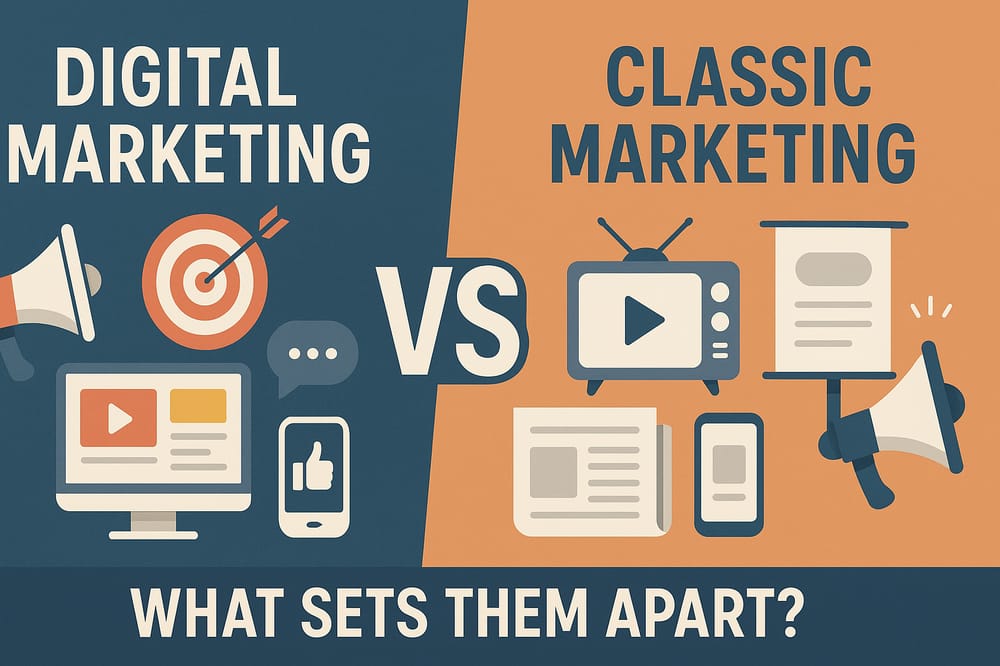
Digital marketing might seem like just the latest buzzword, but it’s far more than that. It’s a dramatic shift that’s changed the way brands connect, convert, and grow. For marketing professionals, students, and small business owners, understanding what makes digital marketing different from classic (or traditional) marketing isn’t just helpful–it’s essential.
This blog examines the unique features of digital and traditional marketing. We’ll dig into their key strategies, core differences, similarities, and how you can decide the right mix for your brand goals.
The Basics: What Do We Mean by Classic and Digital Marketing?
Before we explore what makes these two disciplines distinct, let's quickly define each one.
What Is Classic Marketing?
Classic marketing, often known as Traditional marketing, refers to established promotional channels that have been used for decades. These include:
- Television and radio commercials
- Print ads in newspapers and magazines
- Outdoor advertisements (billboards, bus shelters)
- Direct mail (catalogs, flyers, postcards)
- Telemarketing
Classic marketing’s reach is broad and often targets local or mass-market audiences with one-way communication.
What Is Digital Marketing?
Digital marketing refers to promotional efforts that appear online or use digital channels. Its primary tools include:
- Funnels, websites and blogs
- Email marketing
- Social media (Instagram, LinkedIn, Facebook, X (Twitter), Threads, TikTok, etc)
- Search engine marketing (SEO and SEM)
- Display advertising and retargeting
- Influencer and affiliate marketing
- Mobile marketing (apps, SMS)
With digital marketing, messages are often interactive, highly targeted, and data-driven.
The Core Differences Between Digital and Classic Marketing
Understanding the gap between digital and classic marketing comes down to more than just the channels used. It’s a question of mindset, measurability, audience engagement, and agility.
Audience Targeting and Reach
Classic marketing:
- Targets broad, general audiences with mass messages.
- Segmentation is possible (by geography, publication, or TV/radio show), but fine-tuned personalization is limited.
Digital marketing:
- Allows pinpoint targeting based on demographics, behaviors, browsing patterns, purchase history, and more.
- Ads can be tailored to individuals across multiple channels, making relevance (and results) soar.
Example:
A local car dealership places a TV ad during the evening news (classic) vs. running a Facebook campaign targeting users searching for new cars within a 20-mile radius (digital).
Measurement and Analytics
Classic marketing:
- Success measurement is often indirect or delayed - you may track increased foot traffic or phone inquiries after a radio ad, but attribution is fuzzy.
- Nielsen ratings, ad impressions, circulation numbers, and sales figures are used for estimates.
Digital marketing:
- Virtually every click, view, and conversion is tracked in real time.
- Marketers use dashboards (Google Analytics, social insights, CRM software) to see which messages, platforms, and creatives perform best.
Example:
A print ad in a newspaper is hard to measure for impact, but you can instantly see how many people clicked a Google ad and completed a contact form.
Cost and ROI
Classic marketing:
- High up-front costs for TV, print, and radio with limited flexibility once booked. Production and placement are both expensive.
- ROI is challenging to calculate and optimize quickly.
Digital marketing:
- Budgets can fit any size campaign - from $5 daily on Instagram ads to million-dollar Google campaigns.
- You can pause, tweak, or scale campaigns instantly. ROI is tracked and optimized continuously.
Engagement and Interaction
Classic marketing:
- Communication flows one way. Marketers broadcast; consumers receive.
- Feedback is indirect (e.g., surveys, sales data) and often comes well after the campaign ends.
Digital marketing:
- Two-way conversations are central. Audiences comment, share, and react with brands in real time.
- Social listening, live chats, and targeted emails help brands respond instantly.
Example:
A brand’s Superbowl ad prompts watercooler talk (classic). The same brand runs an interactive hashtag challenge on TikTok, prompting thousands of user-generated videos (digital).
Flexibility and Speed
Classic marketing:
- Planning and production cycles are long. Print or TV spots require weeks (or months) of preparation.
- Once launched, changes are difficult and expensive.
Digital marketing:
- Campaigns launch in hours, not weeks. Marketers can A/B test headlines, calls to action, and creative on the fly.
- Real-time edits mean you can spot opportunities - or correct missteps - immediately.
What Digital and Classic Marketing Have in Common
While the methods and metrics differ, both forms of marketing aim to:
- Build brand awareness and loyalty
- Generate leads and sales
- Communicate value and tell a persuasive story
Many successful campaigns use both approaches together. For example, a product launch might combine a local radio promotion (classic) with a YouTube unboxing series and Instagram ad blitz (digital), maximizing reach and engagement.
When Should You Use Digital vs Classic Marketing?
No approach is “one size fits all.” Instead, consider your goals, audience, and resources.
Digital marketing works best when you want to:
- Target narrowly defined groups or locations
- Collect measurable, actionable data
- Engage audiences quickly and interactively
- Control and optimize your spend in real time
Classic marketing is effective if you need to:
- Reach broad audiences fast (think national TV or radio)
- Build credibility with older or less digitally focused demographics
- Support in-person events and local promotions
- Make an impact with physical, tangible experiences
Tip: For most small businesses and new brands, digital marketing delivers more bang for the buck. But layering in classic marketing tactics–like community sponsorships or direct mail–can unlock new avenues for growth.
Blending Digital and Classic Marketing for Maximum Impact
The most successful brands use a mix of both worlds, building out omnichannel strategies that meet customers where they are.
- Fast food giants run TV ads featuring special app deals.
- Local businesses send direct mail coupons that lead to personalized landing pages online.
- Multinational brands launch global influencer campaigns and reinforce them with eye-catching billboards.
Case study:
When Adidas launched their “Here to Create” campaign, they paired inspirational TV spots with dynamic Instagram stories and user-generated content challenges. This synergy drove brand affinity across age groups and digital spaces.
Key Takeaways and Next Steps for Marketers
Digital marketing stands out for its precision, agility, interactivity, and measurability. Classic marketing remains powerful for building broad awareness and reaching offline audiences. Instead of treating them as rivals, marketers should look at where and how each discipline supports their brand’s bigger objectives.
If you're a marketing professional or student–master the latest digital tactics, but don’t neglect classic fundamentals like positioning and storytelling. Courses like Selling Online can give you a huge advantage over others in the market. Check it out at [this link].
If you’re a small business owner–start with digital tools for cost-effective growth, then experiment with local classic approaches for amplified results. Dan Kennedy has published a book that can guide you to success. It’s called NO BS Direct Marketing for NON-Direct Marketing Businesses, and you can pick up a copy FREE at [this link].
The difference isn’t just in the platform–it’s in the approach. Keep testing, keep learning, and unlock the right mix for your business.
Disclosure: I am an independent Affiliate for Magnetic Marketing and ClickFunnels, not an employee. I receive referral payments from both companies. The opinions expressed here are my own and are not official statements of Magnetic Marketing, ClickFunnels or its parent company, Etison LLC.


Tim Hewitt, Author
Tim is a Freelance Digital Marketer who specializes in helping other marketers to find ways to earn online. When you are frustrated with your prior efforts, Tim will help you find the way!
Copyright © 2026, The Digital Marketing Buzz | All Rights Reserved.