Receive Daily Blog Emails
You agree to receive daily blog emails a link to the full blog contents. You can unsubscribe at any time.
Be Sure To Check Your SPAM Folder For Your Welcome Message and WHITELIST Our Email So It Doesn't Go To SPAM In The Future!
Beware of SMS Phishing Scams in 2025
Wednesday, July 30, 2025
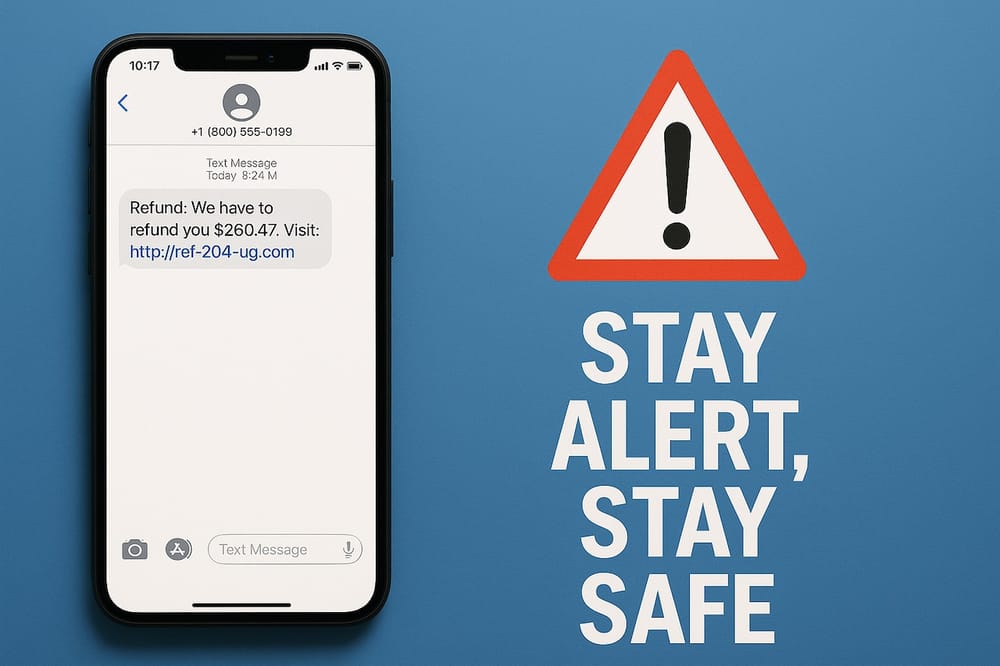
SMS phishing scams, or “smishing,” are evolving at an alarming pace. Cybercriminals have become sophisticated in their tactics, leveraging fake SMS access codes, phony refund offers, and other deceptive methods to exploit users. Falling victim to these scams can result in stolen personal data, unauthorized access to financial accounts, and significant losses.
This blog unpacks the latest SMS phishing schemes, including fake Amazon refund texts, toll payment scams, and OTP (One-Time Password) bot attacks. We’ll also share practical tips to help you identify and avoid these scams, empowering you to protect yourself and your loved ones.
What Are SMS Phishing Scams?
SMS phishing scams exploit the medium of text messages to deceive victims into taking actions such as clicking malicious links, sharing sensitive information, or unknowingly authorizing fraudulent activities. These scams often appear from seemingly legitimate sources and use urgent or enticing language to provoke immediate response.
Latest SMS Phishing Scams You Need to Watch For
1. Fake Amazon Refund Texts
Imagine receiving a text claiming that an item you recently purchased has been recalled, and a refund is due. All you need to do is click the link provided. Sounds harmless, right? Unfortunately, this is a common SMS phishing tactic.
Messages like, “Routine quality inspections revealed a defect in your purchased item. Claim your refund now!” redirect unsuspecting recipients to convincing replica websites where they are tricked into sharing their Amazon login credentials or financial information.
How to Spot It:
- The text mentions unexpected refunds or recalls.
- There's an embedded link requiring urgent action.
- Grammatical errors or slight deviations in sender details, e.g., "Amaz0n" instead of "Amazon."
2. Toll Payment Scams
Another rising scam involves texts impersonating state toll collection agencies. These messages typically inform users about unpaid tolls or outstanding fines, prompting them to settle the balance immediately. Some even threaten legal action if payment isn’t made promptly.
A recent example saw scammers impersonate the “GeauxPass” toll service in Louisiana. Similar tactics have been reported in states without toll roads, making travelers particularly vulnerable.
How to Spot It:
- The message includes threats like penalties or license suspension.
- No previous toll-related communication exists in your records.
- Hyperlinks direct you to suspicious websites masked as official toll payment portals.
3. OTP Bot Attacks
Cybercriminals have also been weaponizing OTP (One-Time Password) bots. These bots work in real time to trick users into sharing secure access codes via deceptive prompts, often under the guise of verifying login attempts or transactions.
For example, you may receive a call or text from a number impersonating your bank, stating, “We’ve noticed suspicious activity; please share the code sent to your phone to verify your identity.” By handing over this code, victims inadvertently grant scammers access to their bank accounts or other sensitive services.
How to Spot It:
- Unexpected messages containing access codes you didn’t request.
- Urgent calls and messages prompting you to share codes or passwords.
- The sender insists they are from official institutions like your bank, yet the contact details don’t match verified channels.
Actionable Tips to Identify and Avoid SMS Phishing Scams
While scammers are getting smarter, a proactive approach can help you stay one step ahead. Use the following tips to safeguard yourself from falling prey to smishing scams.
1. Don’t Click on Suspicious Links
If you receive a link in a text that looks suspicious, don’t tap on it. Instead, visit the official website or app of the service in question to verify any notifications or messages.
2. Use Multi-Factor Authentication (MFA)
Enabling MFA on your accounts adds an extra layer of security, even if scammers access your credentials. Choose app-based authenticators like Google Authenticator or Microsoft Authenticator rather than SMS-based codes whenever possible.
3. Verify Messages from Trusted Sources
Never trust text messages at face value. Call the company using official contact information or check directly through their app or website for updates or alerts.
4. Avoid Sharing Personal Information via Text
Legitimate companies will not ask you to share passwords, OTPs, or account details through text messages. If someone asks for this information, it’s likely a scam.
5. Report and Block Suspicious Numbers
Forward fraudulent texts to 7726 (SPAM) to report them, and block the sender immediately. This will also help authorities monitor and combat SMS phishing schemes.
6. Stay Educated on Scam Trends
Regularly check reliable cybersecurity resources for updates on the latest trends in phishing scams. Staying informed is one of the most effective defenses against falling victim.
What to Do If You Are Targeted
If you suspect you’ve been targeted by an SMS phishing scam—or worse, fallen for one—take immediate action.
- Stop engaging with the text or sender.
- Change your passwords for any affected accounts.
- Run antivirus scans on your devices to check for malicious software.
- Report the scam to your bank, phone carrier, or the Federal Trade Commission (FTC) via reportfraud.ftc.gov.
Stay Vigilant Against SMS Phishing
Scammers continue to refine their techniques, making even the savviest users potential targets for SMS phishing scams. The best defense is a mix of vigilance, proactive account security, and an understanding of how these frauds operate.
By following the tips above and spreading awareness, you can help create a community that’s better equipped to combat cybercrime. Share this article with friends and family to protect them from smishing scams, too.
Subscribe to this blog to stay on top of everything you need to be successful in your online business.


Tim Hewitt, Author
Tim is a Freelance Digital Marketer who specializes in helping other marketers to find ways to earn online. When you are frustrated with your prior efforts, Tim will help you find the way!
Copyright © 2026, The Digital Marketing Buzz | All Rights Reserved.