Receive Daily Blog Emails
You agree to receive daily blog emails a link to the full blog contents. You can unsubscribe at any time.
Be Sure To Check Your SPAM Folder For Your Welcome Message and WHITELIST Our Email So It Doesn't Go To SPAM In The Future!
A 10-Page PDF is NOT an eBook!
Monday, July 07, 2025
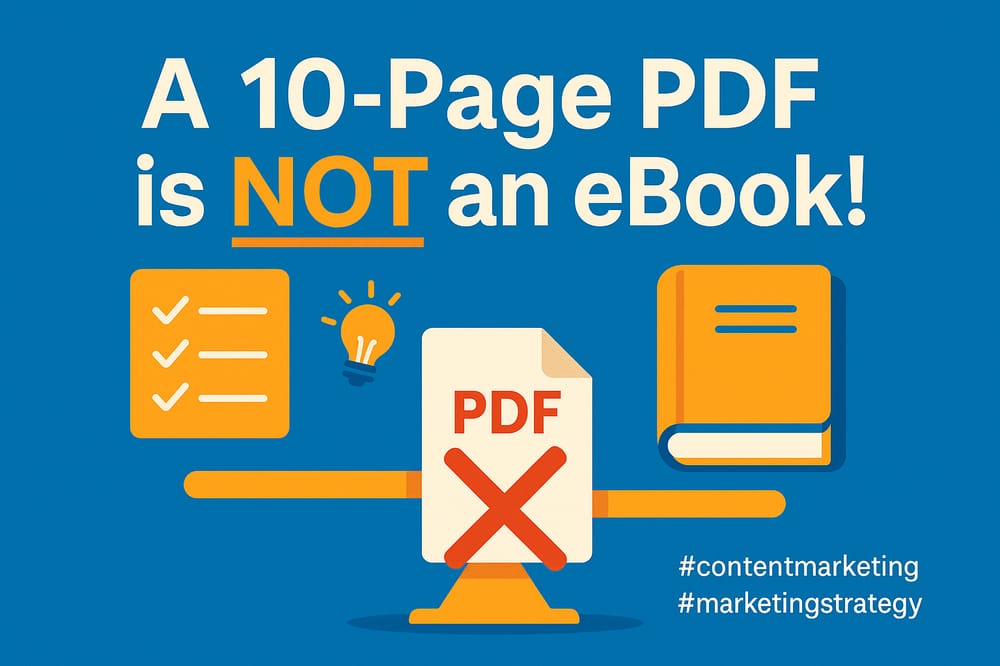
Are you calling a 10-page PDF an eBook? Stop. Right. There.
The term "eBook" used to represent the digital equivalent of a book you could proudly display on a shelf. But somewhere along the way, marketers started throwing the word "eBook" around like it was just another type of lead magnet. And now? A 2-page PDF slapped together in under an hour gets mistakenly labeled as an eBook.
This misrepresentation has damaged the credibility of digital marketers, leaving readers underwhelmed and skeptical. It’s time to set the record straight.
An eBook is not your quick PDF guide. It’s a thoughtfully crafted digital book, a proper publication. And if you’re handing out a lead magnet, call it what it is.
Let's break this down.
What is an eBook really?
At its core, an eBook (short for electronic book) is a legitimate digital version of a full-fledged book. Think of it as something you’d spend hours poring over on your Kindle or eBook reading app. It’s not a random file. It’s a structured, long-form piece of content that provides real depth and value.
Consider these characteristics of a true eBook:
- Size: Typically 50+ pages (often spanning hundreds if it’s a novel or guide).
- Purpose: Offers extensive insights into a topic. It’s a deep-dive, like a manual, course, or comprehensive exploration.
- Format: Designed for optimal reading on e-readers like Kindle, Nook, or dedicated eBook apps.
Think The Great Gatsby, your go-to biography, or even a full-fledged industry whitepaper. That’s an eBook.
Not a 10-page checklist full of fluff.
Why Calling a PDF an eBook Hurts Digital Marketing
Mislabeling a simple PDF as an eBook isn’t just inaccurate; it actively damages trust. Here’s why this needs to stop:
1. It Undermines Credibility
When someone downloads an “eBook” expecting a detailed read, and they’re handed five rushed paragraphs and some generic images, they're disappointed. That disappointment erodes trust in your brand.
If marketers keep bending the term “eBook”, it dilutes the value of actual digital publications. And it makes customers second-guess other “free resources.”
2. It Creates Misaligned Expectations
When people think "eBook," their expectations are elevated. They anticipate an in-depth guide, a significant resource. A quick lead-generation PDF can't deliver on that promise, leaving users feeling cheated.
3. It Hurts Conversions
If potential leads don’t trust that your resources deliver value, they’ll stop engaging with your content. They may also hesitate to download future resources or even open your emails.
Stop Calling It an eBook. What Should You Call It Instead?
Words matter. If it’s not an eBook, don’t call it one. Instead, use a name that matches the scope and intent of the content. Here are some accurate alternatives you could use for those shorter PDFs you create as lead magnets.
1. PDF Report
Straightforward, descriptive, and accurate. A “PDF Report” says exactly what it is without overhyping it.
2. Guide
A handy guide implies it’s helpful, but doesn’t create expectations of comprehensive depth.
3. Checklist
Perfect for shorter, actionable documents. A checklist feels less like a commitment and more like a tool.
4. Whitepaper
If your PDF offers detailed research or analysis, this term works well for professional or technical audiences.
5. Downloadable Resource
If you’re unsure, keep it general. Call the document a “Downloadable Resource” to set realistic expectations.
Example Time
Here’s what NOT to do:
“Download Our Free eBook on Digital Marketing Tips!”
The result? 8 pages, reused stock photos, 3 tips everyone’s seen before.
Here’s what TO do instead:
“Grab Your Free Digital Marketing Checklist!”
The result? The same 8 pages, but positioned correctly. No fluff, no confusion, just clear expectations and value.
Why Being Honest is Better for Everyone
When you start to correctly label your downloadable content, three significant benefits emerge for your brand and audience.
1. You Build Trust
Honesty goes far in maintaining credibility. Your audience will come to associate your name with genuine value.
2. You Attract the Right Leads
Accurate labeling ensures the right people are downloading your content for the right reasons. No more empty downloads or uninterested leads.
3. You Repair Reputation
Digital marketers as a group get a bad rap for using clickbait and over-exaggerated promises. When you lead the way with transparency, it reflects positively on the industry as a whole.
If You Must, Create REAL eBooks
Here’s the thing. eBooks still thrive as a content type when they’re done right. If you really want to use the term “eBook,” it’s worth investing the time and effort to create one that holds up to the name.
Tips for creating a legit eBook:
- Length Matters: Aim for 50+ pages of well-organized content.
- Depth is Key: Make it a genuine deep-dive into a topic your audience cares about.
- Optimize for eBook Platforms: Format it appropriately for platforms like Kindle or Apple Books using software like Vellum.
For genuine results and lasting impact, create once and repurpose the heck out of it. Your real eBook becomes a multi-use asset for blogs, podcasts, presentations, and more.
Final Sip
Digital marketers, it’s time to stop abusing the word “eBook” for short PDFs and quick lead magnets. Misusing this word erodes trust and diminishes the quality of your messaging.
Instead, call your content what it really is and focus on delivering relevant, valuable resources to your audience. Doing so builds your credibility and ensures each piece of content resonates with your readers.
Our flagship program will teach you how to get started in 5 easy lessons, with no risk to you. A low cost training with a money back guarantee, this challenge will start you off on the right foot.
Check it out at this link.
A video review is also available
Disclaimer: If you click on links we provide and make a purchase, we may receive compensation. There is never any guarantee of income in any of the links or programs we provide.


Tim Hewitt, Author
Tim is a Freelance Digital Marketer who specializes in helping other marketers to find ways to earn online. When you are frustrated with your prior efforts, Tim will help you find the way!
Copyright © 2026, The Digital Marketing Buzz | All Rights Reserved.